
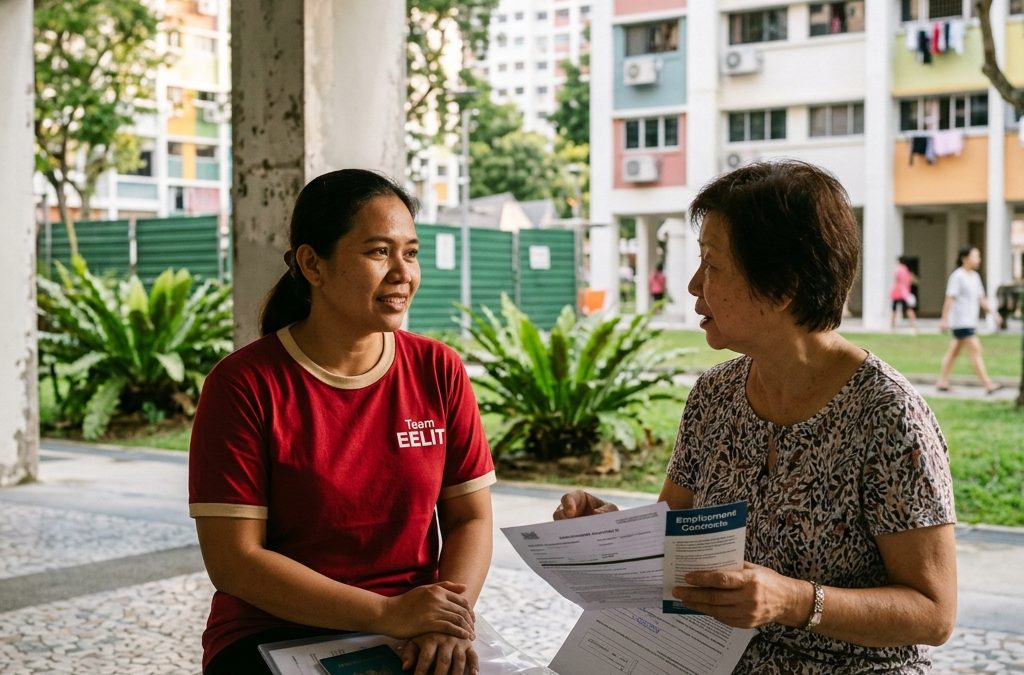
Navigating the two-year milestone of a domestic helper’s contract involves a complex mix of emotional readiness, logistical planning, and strict adherence to Ministry of Manpower (MOM) regulations. For many Singaporean families, this period marks a crossroad where they must decide whether to renew a partnership that has become essential to their daily household rhythm or prepare for a transition. At EELIT Agency Pte. Ltd., we recognize that managing home leave protocols and contract extensions is not merely a matter of paperwork; it is about ensuring the continuity of care for your children and elderly parents while respecting the legal rights and personal needs of the migrant domestic worker (MDW).
The Legal Framework of Work Permit Renewals and Home Leave in 2026
The Singapore government has consistently updated the regulations surrounding migrant domestic workers to ensure a fair and transparent employment environment. As we move through 2026, the Ministry of Manpower has streamlined the digital renewal process, making it essential for employers to act well in advance of the work permit expiry date. Typically, MOM sends out a renewal notice about eight weeks before the permit expires. This is the critical window where the family must decide if they wish to extend the employment for another two years.
Legally, when a helper completes her two-year contract and agrees to renew it, she is entitled to home leave. This period is generally understood to be 15 days of paid leave, during which the employer is responsible for the cost of the return airfare. The home leave serves as a vital restorative period for the helper, allowing her to reconnect with her family and return to Singapore with renewed energy. If the helper chooses not to go home immediately upon renewal, the home leave can be deferred by mutual agreement, but the entitlement remains a core part of the contractual obligation.
Employers must also be mindful of the Security Bond and Personal Accident Insurance requirements. For a renewal to be valid, the employer must purchase a new bond and insurance policy that covers the duration of the new work permit. Failing to do this before the current permit expires can lead to overstaying fines and the forfeiture of the existing bond. EELIT Agency simplifies this by managing the insurance buy-in and bond execution, ensuring that your legal standing remains untarnished throughout the transition.
Establishing Practical Protocols for Home Leave Planning
Preparation for home leave should begin at least three to four months before the departure date. The first step involves an open conversation with your helper regarding her travel plans and the family’s schedule. You should avoid peak travel seasons if possible, but you must also respect the helper’s desire to be home for significant cultural or religious milestones, such as Hari Raya for Indonesian helpers or Christmas for Filipino helpers. Once the dates are settled, the airline tickets should be booked. It is the employer’s responsibility to provide a round-trip ticket that includes a check-in luggage allowance, as most helpers will be bringing gifts and necessities back to their home provinces.
The logistical impact on a Singaporean household during those 15 days can be significant, especially in multi-generational homes. Families should create a “home leave contingency plan.” This might involve coordinating leave between spouses, seeking temporary help from extended family members, or engaging short-term respite care services for elderly relatives. We advise our clients to treat this period as a practice run in self-sufficiency, ensuring that all family members are briefed on household chores and caregiving routines that the helper usually manages.
Another practical protocol is the “Handover Checklist.” Before the helper departs, she should ensure that all household inventories are topped up, emergency contact numbers are visible, and any specific instructions for plant care or pet routines are written down. This minimizes the need to contact her while she is on her break, allowing her to fully focus on her family. It is also a gesture of respect to her privacy and rest time, which strengthens the long-term employer-employee relationship.
Navigating the Specific Requirements for Filipino Domestic Helpers
Hiring a Filipino domestic helper involves dealing with the Department of Migrant Workers (DMW), formerly known as POEA. The home leave protocol for Filipino helpers is unique due to the requirement of the Overseas Employment Certificate (OEC). This document serves as proof that the helper is a documented overseas worker and exempts her from paying the Philippine travel tax and terminal fees at the airport. Without a valid OEC, a Filipino helper may be prevented from boarding her return flight to Singapore.
1. Contract Verification: Before an OEC can be issued for a renewing helper, the employment contract must be verified by the Migrant Workers Office (MWO) at the Philippine Embassy in Singapore. This process ensures that the contract meets the minimum salary requirements and labor standards set by the Philippine government.
<2. DMW Portal Registration: Most of these processes have moved to the "DMW Mobile App" or online portal. The helper needs to ensure her profile is updated. If she is returning to the same employer, she might be eligible for an OEC exemption, but this must still be confirmed through the online system prior to her departure.
<3. OWWA Membership: The helper must also have an active membership with the Overseas Workers Welfare Administration (OWWA). This requires a small fee but provides her with various benefits and insurance coverage from the Philippine government. Employers often cover this fee as a gesture of goodwill during the renewal process.
Managing the Process for Indonesian Domestic Helpers
The protocol for Indonesian helpers has seen significant changes with the implementation of the “Zero Placement Fee” policy and the involvement of the P3MI (Indonesian recruitment agencies). When an Indonesian helper goes on home leave, the primary focus is on ensuring her passport is valid for at least six months and that her Indonesian social security (BPJS Ketenagakerjaan) is updated if necessary. Unlike the Filipino OEC, the Indonesian process is often less about a specific exit pass and more about the helper being registered in the SISKOP2MI system.
Employers should ensure that the helper has a copy of her renewed work permit and a signed employment contract that has been acknowledged by the Indonesian Embassy (KBRI) if required. It is also important to verify if the helper needs to update her E-KTWKL (Electronic Identity Card for Overseas Workers). While the Indonesian government has simplified some of these requirements, staying informed through a licensed agency like EELIT ensures that your helper does not encounter issues with Indonesian immigration upon her return to Singapore.
Communication is particularly important here. Many Indonesian helpers come from rural areas where internet connectivity might be limited. Employers should establish a clear communication plan, perhaps a scheduled check-in halfway through the leave, to ensure that the helper is safe and her travel plans remain on track. This provides peace of mind for the family waiting for her return in Singapore.
Contract Extension Protocols: Negotiation and Salary Reviews
A contract renewal is the most appropriate time to conduct a formal performance appraisal. Rather than a stressful critique, this should be a constructive conversation focused on the growth of the helper and the evolving needs of the family. If the helper’s responsibilities have increased—for instance, if she is now caring for a newborn or an aging parent with mobility issues—a salary increment is not just fair; it is a standard industry practice in Singapore to retain quality talent.
1. Salary Adjustment: While there is no mandatory minimum increment set by MOM, a typical increase ranges from $50 to $100 per month, depending on performance and the current market rate. Offering a competitive salary during renewal prevents “helper poaching” and shows that you value her contribution to your home.
<2. Retention Bonus or Gratuity: Some families choose to offer a one-time "completion bonus" at the end of the two-year cycle. This acts as a powerful incentive for the helper to complete her subsequent contract and provides her with significant savings to send home for investments like house building or education for her children.
<3. Terms of Employment: Review the daily rest days. Many helpers who have been with a family for two years may appreciate more flexibility, such as a choice of which day to take off or the option to compensate a rest day with extra pay if the family has a specific event. These nuances should be documented in the new contract to avoid future misunderstandings.
The Financial Implications: Levies, Insurance, and Waivers
Renewing a contract involves several financial considerations that go beyond the helper’s salary. One of the most overlooked benefits for employers is the MOM Levy Waiver. When your helper goes on home leave for at least seven consecutive days, you are eligible to claim a waiver for the foreign worker levy for the period she is out of the country. This claim can be made via the CPF website after the helper has returned and the records have been updated in the MOM system.
The cost of the airfare is a significant outlay. We recommend booking “Flexi” tickets even if they are slightly more expensive. Unexpected events in the helper’s home country or changes in Singapore’s border health protocols can necessitate date changes. Having a flexible ticket prevents the total loss of the airfare cost. Furthermore, ensure that the helper’s medical insurance is active even while she is overseas. While the primary MOM-mandated insurance is for her time in Singapore, some comprehensive policies offer limited coverage during home leave, providing an extra layer of protection for both parties.
Finally, the security bond must be renewed. In Singapore, the standard bond is $5,000. Most employers opt for an insurance guarantee to cover this bond, which costs a fraction of the amount. It is vital to ensure that the effective date of the new bond begins exactly when the old one expires to prevent any lapse in legal coverage.
Handling Real-World Scenarios and Disruptions
Even with the best planning, complications can arise. A common scenario is the “Emergency Home Leave,” where a helper needs to return home suddenly due to a family crisis before her contract is up. In these instances, the employer is not legally mandated to pay for the flight, but most do so out of compassion. EELIT Agency recommends having a written agreement on whether this emergency leave will be deducted from her future home leave entitlement or if it is an additional period of unpaid leave.
Another scenario is when a helper decides during her home leave that she does not wish to return to Singapore. While this is rare for helpers who have already signed a renewal, it can happen due to family pressures or changes in personal circumstances. If this occurs, the employer must cancel the work permit to stop the levy accrual and discharge the security bond. Having a professional agency involved helps in navigating these disputes, especially in recovering any advanced salary or managing the transition to a replacement helper quickly.
What if the helper overstays her leave due to illness? In such cases, the helper should provide a medical certificate from her local doctor, and the employer should notify MOM if the return will be significantly delayed. Clear documentation is the best defense against any potential issues with the security bond. It is these unpredictable moments where the guidance of an experienced employment agency becomes invaluable.
How EELIT Agency Supports Your Family Through the Transition
At EELIT Agency Pte. Ltd., we believe that the renewal process should be a period of celebration for a successful partnership rather than a source of administrative stress. Our comprehensive renewal service is designed to handle every detail mentioned in this guide. We manage the documentation for the Philippine and Indonesian embassies, ensuring that all contracts are verified and compliant with the latest 2026 standards. This saves employers hours of queuing and navigating complex government portals.
We provide mediation services during the contract extension negotiations. Sometimes, discussing money and performance can be awkward for both the employer and the helper. Our consultants act as a neutral third party to facilitate these discussions, ensuring that the new terms are fair and that both parties feel heard and respected. We also assist in sourcing the most cost-effective insurance and bond packages, ensuring that you get maximum coverage without unnecessary expenses.
For families who are unsure about whether to renew, we offer consultation services to assess the current relationship and provide honest feedback. If a change is necessary, we manage the transition smoothly, helping you find a new helper who fits your current household needs while ensuring your outgoing helper is repatriated or transferred according to MOM guidelines. Our goal is to provide a stable caregiving environment for your home, year after year.
Conclusion: Building a Sustainable Caregiving Relationship
The successful management of home leave and contract extensions is a hallmark of a mature and healthy employer-helper relationship. By following structured protocols, staying ahead of legal requirements, and treating the helper with the fairness and respect she deserves, Singaporean families can ensure a harmonious household. Home leave is not just a logistical hurdle; it is an investment in your helper’s mental well-being, which directly translates to the quality of care she provides to your loved ones.
As the landscape of domestic employment in Singapore continues to evolve, staying informed through a trusted partner like EELIT Agency Pte. Ltd. is the best way to protect your interests and provide a supportive environment for your helper. Whether you are navigating your first renewal or are a seasoned employer, a proactive approach to home leave and contract protocols ensures that your focus remains where it matters most: on the well-being and happiness of your family.
Connect with EELIT Placement Specialists
Speak directly with our senior placement consultants for personalized bio matching, MOM Work Permit processing, and household caregiving support across Singapore:
Corporate Headquarters Placement Consultation
Corporate HQ Priority WhatsApp: +65 9100 1610
Juliet (Senior Consultant): Chat with Juliet (+65 9168 2493) |
Joey (Senior Consultant): Chat with Joey (+65 8725 2891)
HQ Office Telephone (Hotline / Voice Call Only): +65 6320 3826
Islandwide Branch WhatsApp Lines
Orchard (Far East Shopping Centre): +65 9478 2786
Hougang: +65 8043 9823
Yishun: +65 8090 3168