
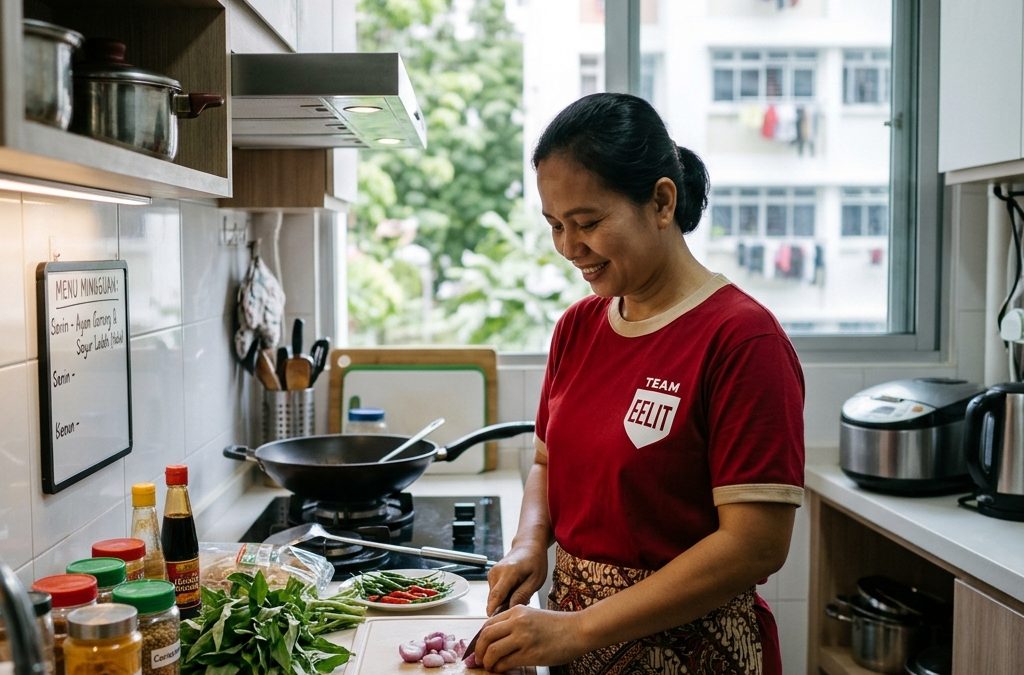
Welcoming an Indonesian domestic helper into your Singaporean household is a significant transition that involves more than just administrative paperwork or assigning chores. For many Indonesian helpers, their faith is the cornerstone of their identity, and the concept of a Halal kitchen is central to their daily comfort and spiritual peace. As we move toward the 2026 Ministry of Manpower (MOM) guidelines which place a heightened emphasis on the holistic well-being and mental health of Migrant Domestic Workers (MDWs), understanding how to manage a Halal-compliant environment becomes a core skill for any proactive employer. At EELIT Agency Pte. Ltd., we recognize that a helper who feels respected in her religious practices is a helper who will serve your family with greater dedication and longevity. This guide provides an exhaustive look at setting up your kitchen, managing groceries, and planning menus that honor her needs while maintaining the harmony of your multi-generational Singaporean home.
The 2026 MOM Framework and the Importance of Religious Accommodation
The Singapore Ministry of Manpower has consistently updated its policies to ensure that the relationship between employers and domestic workers is built on mutual respect. By 2026, the regulatory framework will further reinforce the necessity of providing an environment conducive to the mental and physical health of MDWs. This includes ensuring that their dietary requirements, dictated by their religion, are met without undue stress. For an Indonesian Muslim helper, consuming Halal food is not a preference but a non-negotiable religious obligation. When an employer takes the initiative to facilitate a Halal kitchen setup, it sends a powerful message of inclusion and respect. This proactive approach reduces the “culture shock” many new helpers face and directly impacts their retention rate. At EELIT Agency, we often see that the most successful placements are those where the employer has taken the time to understand the Halal requirements before the helper even arrives at the doorstep of the HDB or condo.
Establishing the Physical Boundaries: Utensils and Storage
The primary concern in a Halal kitchen, especially in a household that might consume pork or non-halal meat, is cross-contamination. You do not necessarily need two separate kitchens, but you do need a clear system of separation. This begins with the utensils and cookware used for the helper’s meals. We recommend purchasing a dedicated set of pots, pans, knives, and cutting boards specifically for Halal preparation. Many Singaporean families find it helpful to color-code these items. For instance, green-handled knives and green-rimmed plates can be designated for Halal use only, making it easy for everyone in the family, including children and elderly parents, to identify them.
Storage is the next critical step. In the compact kitchens typical of Singapore flats, space is at a premium. However, a dedicated shelf in the pantry and a specific section in the refrigerator are essential. Raw non-halal meat should always be stored in tightly sealed containers on the lowest shelf of the fridge to prevent any juices from dripping onto Halal ingredients below. In the freezer, use clearly labeled bins to separate Halal-certified meats from other products. If your helper is responsible for cooking both the family’s non-halal meals and her own Halal meals, she should be taught to wash her hands thoroughly and change the cleaning sponges between tasks. Using a separate sponge for Halal dishes is a small but deeply appreciated gesture that ensures her peace of mind during daily chores.
Navigating the Singapore Grocery Aisles: The Halal Certification
Singapore is one of the best places in the world to manage a Halal diet due to the rigorous standards of the Majlis Ugama Islam Singapura (MUIS). When shopping at major retailers like FairPrice, Sheng Siong, or Cold Storage, the MUIS Halal logo is your primary guide. However, for a new Indonesian helper, the sheer variety of processed foods in Singapore might be overwhelming. It is helpful to accompany her on the first few grocery trips to point out where the Halal-certified poultry and beef are located. In many HDB estates, wet markets offer fresh Halal meat stalls which many Indonesian helpers prefer because the quality reminds them of home.
Beyond fresh meat, you must look closely at pantry staples. Many common ingredients in Singaporean cooking, such as certain oyster sauces, bouillon cubes, or even snacks, may contain traces of pork derivatives or non-halal gelatin. Always check the packaging for the Halal mark. If you are ordering groceries online via RedMart or Grab, use the “Halal” filter to narrow down the choices. It is also wise to discuss the use of alcohol in cooking. Traditional Chinese cooking often involves Hua Tiao Chiew (Rice Wine). In a Halal kitchen setup, this should be kept entirely separate, and the helper should be informed that it cannot be used in her food or in the pans designated for her use. For shared family meals where you want her to join in, consider using Halal-certified substitutes like balsamic vinegar or apple juice for acidity instead of cooking wine.
Daily Protocols and Cleaning Hygiene
Hygiene is a major component of Halal living. If a situation arises where non-halal food accidentally touches the Halal-designated utensils, the process of “Sertu” (ritual cleansing) may be required. While this sounds complex, it usually involves washing the item seven times, once with water mixed with soil and six times with clean water. However, in a modern Singaporean context, most helpers will feel comfortable if the contaminated item is thoroughly scrubbed with soap and hot water, provided it was an accident. The key is communication. Encourage your helper to speak up if she feels a utensil has been compromised. If she is afraid of being scolded, she may keep quiet, which leads to spiritual distress.
Daily routines should also account for her prayer times (Salat). A clean, dry area in her room or a quiet corner of the flat should be made available for her five daily prayers. While this is not directly related to “kitchen setup,” it is part of the overall “Halal lifestyle” in the home. If she is cooking during prayer times, allow her the ten to fifteen minutes needed to perform her prayers before returning to the stove. This flexibility creates a harmonious environment where she feels her identity is valued alongside her labor.
Designing a Daily Halal Menu: Flavor and Nutrition
Indonesian cuisine is diverse, and your helper’s preferences will vary depending on whether she is from Java, Sumatra, or Sulawesi. Most Indonesian helpers appreciate a diet centered on rice, a protein source, and plenty of vegetables. To ensure she is well-nourished and happy, consider a weekly menu that incorporates familiar flavors. Here is a practical approach to a daily menu that can be easily prepared in a Singaporean flat:
1. Breakfast: A simple start with Nasi Goreng (Fried Rice) using leftover rice from the night before, topped with a fried egg and sliced cucumbers. Alternatively, bread with Halal-certified fruit jam or chocolate spread is common.
2. Lunch: This is often the main meal. A hearty dish like Ayam Masak Merah (Chicken in Spicy Tomato Sauce) or Sayur Lodeh (Vegetable Stew in Coconut Milk) provides the energy needed for afternoon chores. Tempeh and Tofu are excellent, cost-effective protein sources that are staples in Indonesian households and are readily available in Singapore wet markets.
3. Dinner: If the family eats together and the meal is Halal, she can share the same dishes. If the family is eating non-halal food, she can quickly whip up a dish of Sambal Telur (Eggs in Chili Sauce) or a simple stir-fry of kangkong with garlic. Always ensure there is a stock of “Sambal” in the fridge, as many Indonesian helpers find meals incomplete without a spicy condiment.
4. Hydration and Snacks: Ensure she has access to tea, coffee, and fruit. Many helpers enjoy “Es Teh” (Sweet Iced Tea) or simple fried snacks like Bakwan (Vegetable Fritters) during their afternoon break.
Managing the Month of Ramadan
The fasting month of Ramadan is a unique period that requires adjustments in the kitchen schedule. During this month, your helper will refrain from eating or drinking from dawn until sunset. This means her “Suhur” (pre-dawn meal) will be around 4:30 AM to 5:00 AM. As an employer, you do not need to wake up with her, but ensure she has easy access to the kitchen to prepare a quick meal. Her energy levels might dip slightly in the late afternoon, so consider scheduling heavier cleaning tasks for the morning hours. “Iftar” (breaking the fast) occurs around 7:00 PM to 7:15 PM in Singapore. It is a kind gesture to allow her a few minutes to break her fast with a date and some water before she finishes serving the family’s dinner. Many employers find that gifting their helper some special treats or a “Baju Raya” (new clothes for Eid) at the end of the month goes a long way in building a lifelong bond of loyalty.
Real-World Scenarios and Troubleshooting
Scenario A: Ordering Food Delivery. When the family orders food via apps, it is easy to forget the helper. Always check if there is a Halal option from the same restaurant or order a separate Halal meal for her. If the restaurant is not Halal-certified, do not assume she can just “eat the vegetables” from a dish that contains pork or lard. Cross-contamination in a commercial kitchen is a serious concern for many practitioners.
Scenario B: Eating Out. If you are taking your helper along for a family dinner at a non-halal seafood or Chinese restaurant, talk to her beforehand. Many helpers are comfortable sitting at the table but will prefer to eat their own packed Halal meal or wait until they get home. Others may be fine with seafood dishes that are prepared without pork or lard, provided the restaurant uses separate utensils (though this is rare in non-halal establishments). The safest and most respectful route is to choose Halal-certified establishments for family outings whenever possible.
Scenario C: Shared Appliances. Air fryers and microwave ovens are common points of contact. If you use these for both Halal and non-halal food, use baking paper or aluminum foil as a barrier. This prevents juices from non-halal meats from touching the surfaces where the helper’s food will be placed. It is a simple, low-cost solution that maintains the integrity of the Halal setup.
How EELIT Agency Supports Your Household
At EELIT Agency Pte. Ltd., we do not just provide a biodata; we provide a bridge between two cultures. Our training programs for Indonesian helpers include modules on working in Singaporean urban environments, which covers the basics of maintaining a Halal diet within a non-halal household. We educate our candidates on how to communicate their needs politely and effectively to their new employers. For employers, we offer orientation advice that specifically covers the logistical setup of a Halal kitchen. We understand that for a busy Singaporean family, these details can feel overwhelming. Our consultants are always available to mediate and provide practical tips if there is any confusion regarding dietary boundaries or religious observations.
By choosing EELIT, you are partnering with an agency that understands the 2026 MOM vision of a sustainable and respectful employment relationship. we believe that the kitchen is the heart of the home, and by making it a space where your helper feels safe and respected, you are ensuring a more stable and happy domestic life for your entire family. The investment you make in a few green-handled knives and a dedicated shelf in the pantry pays dividends in the form of a loyal, focused, and motivated helper who feels truly at home in your flat.
Conclusion: Building a Foundation of Mutual Respect
Setting up a Halal kitchen for your Indonesian helper is more than a logistical necessity; it is an act of empathy that defines the tone of your professional relationship. In the fast-paced environment of Singapore, where many families rely heavily on domestic help to manage childcare and elderly care, the stability of the household depends on the well-being of the helper. By following the guidelines outlined in this guide—from clear utensil separation to thoughtful menu planning and understanding the nuances of the 2026 MOM framework—you are setting your household up for success. Remember that clarity is the enemy of conflict. Discussing these arrangements openly during the first week of employment prevents misunderstandings and builds a foundation of trust. At EELIT Agency, we remain committed to helping Singaporean families navigate these cultural waters with ease, ensuring that every home is a place of harmony, respect, and excellent care.
Connect with EELIT Placement Specialists
Speak directly with our senior placement consultants for personalized bio matching, MOM Work Permit processing, and household caregiving support across Singapore:
Corporate Headquarters Placement Consultation
Corporate HQ Priority WhatsApp: +65 9100 1610
Juliet (Senior Consultant): Chat with Juliet (+65 9168 2493) |
Joey (Senior Consultant): Chat with Joey (+65 8725 2891)
HQ Office Telephone (Hotline / Voice Call Only): +65 6320 3826
Islandwide Branch WhatsApp Lines
Orchard (Far East Shopping Centre): +65 9478 2786
Hougang: +65 8043 9823
Yishun: +65 8090 3168