
For many Singaporean families, managing a household involves a delicate balance of career commitments, childcare, and eldercare. In this fast-paced environment, the Migrant Domestic Worker (MDW) serves as a vital support pillar, ensuring that the daily gears of the home turn without friction. However, with the privilege of hiring domestic help comes a set of non-negotiable legal responsibilities mandated by the Ministry of Manpower (MOM). One of the most frequent administrative requirements is the Six-Monthly Medical Examination, commonly known as the 6ME. Traditionally, this involved the employer or a family member taking time off work to escort the helper to a crowded neighborhood clinic, facing long wait times and potential exposure to seasonal illnesses. Today, the rise of home-based phlebotomy services has transformed this mandatory chore into a professional, time-saving healthcare solution. As a senior specialist at EELIT Agency Pte. Ltd., I have observed how switching to home-based 6ME services significantly reduces stress for both the employer and the helper, ensuring total compliance while maintaining the sanctuary of the home.
Understanding the MOM 6ME Framework and 2026 Projections
The 6ME is a mandatory medical screening for all Migrant Domestic Workers in Singapore. The primary objective is to ensure that the worker is fit for duty and to detect any infectious diseases or underlying health conditions early. The standard 6ME package includes tests for pregnancy and syphilis (VDRL) every six months. Additionally, a test for HIV is required every two years, and a screening for Tuberculosis (TB) may be required depending on the duration of the worker’s stay and previous results. Failure to complete these tests within the window specified by MOM can result in the revocation of the domestic worker’s Work Permit and a fine for the employer.
Looking ahead toward 2026, the Singapore government is increasingly integrating MDW healthcare into the broader Healthier SG initiative. We anticipate a shift toward more digitized health tracking and a stronger emphasis on preventive care. By 2026, it is expected that medical results will be processed even faster through unified laboratory portals, and the role of mobile phlebotomy will become the gold standard for high-density residential areas. This shift recognizes that bringing the clinic to the home reduces the burden on public primary care networks. At EELIT Agency, we stay ahead of these regulatory updates to ensure that our clients are never caught off guard by changing deadlines or new screening requirements.
The Evolution of Home-Based Phlebotomy in Singapore
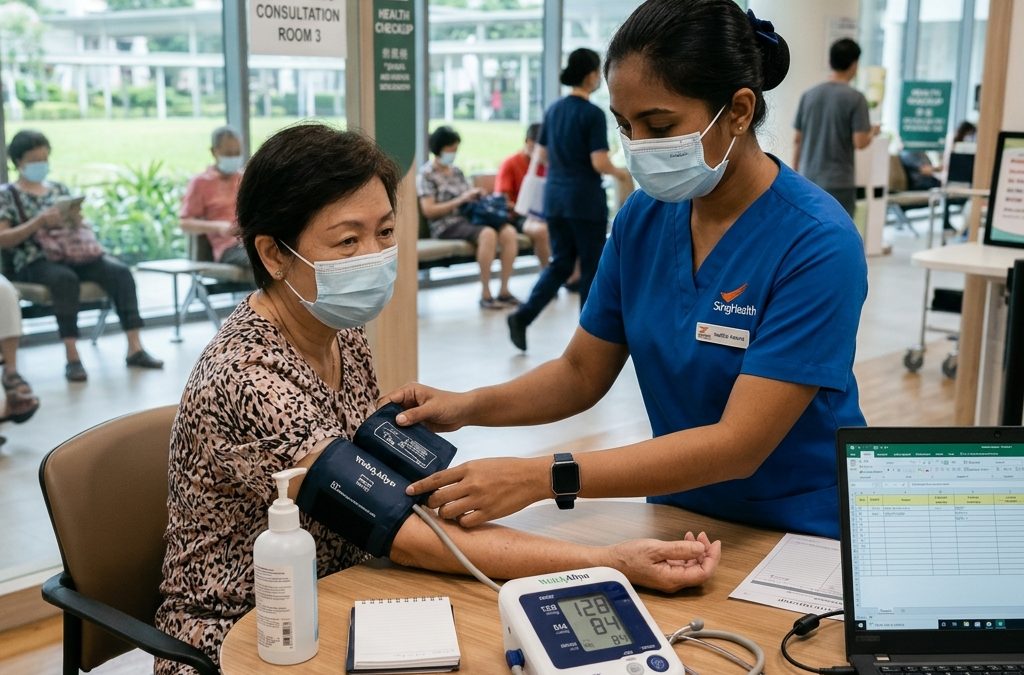
Phlebotomy is the practice of drawing blood from a vein, usually for laboratory testing. In the past, this was almost exclusively done in hospitals or GP clinics. However, Singapore has seen a professionalization of mobile nursing services. Licensed phlebotomists and qualified nurses now provide “6ME at Home” services, bringing sterile equipment, collection kits, and the necessary documentation directly to your doorstep. This is particularly beneficial for households with elderly family members who require the helper’s constant presence, or for working parents who cannot afford to lose half a day to clinic queues.
The process of home-based blood collection is identical to that of a clinic but occurs in a familiar environment. For the domestic worker, this often reduces the anxiety associated with medical procedures. A relaxed helper is more likely to provide accurate health disclosures and feel valued by their employer. From a logistical standpoint, the home-based service model handles the transportation of samples to the laboratory, ensuring that the cold chain is maintained and samples remain viable for testing. This professional oversight eliminates the risk of lost forms or delayed submissions to the MOM portal.
Detailed Preparation for the 6ME at Home
Preparation is key to a successful home-based medical examination. While the phlebotomist brings the medical tools, the employer must ensure the administrative side is ready. The following steps provide a clear roadmap for a smooth experience.
- Verification of the MOM Notification Letter: The MOM sends a notification letter or email approximately one month before the 6ME is due. This letter contains the specific tests required for that cycle. It is important to have this letter ready, either in hard copy or digital format, as the phlebotomist will need to verify the required tests and the worker’s details.
- Scheduling the Appointment: Contact a mobile phlebotomy provider at least two weeks before the deadline. Most services offer early morning slots which are ideal because some tests might require fasting, although standard 6ME tests for pregnancy and syphilis typically do not. Confirming the appointment early ensures you stay within the legal window provided by MOM.
- Document Readiness: Ensure the helper has her original Work Permit card available. The phlebotomist is required to verify the identity of the person they are drawing blood from to prevent fraud. A photocopy is usually not sufficient for legal medical records.
- Creating a Suitable Workspace: Identify a well-lit, clean area in the home for the procedure. A dining table or a sturdy desk near a power outlet (if needed) is usually best. Ensure there is a comfortable chair for the helper to sit in while the blood is drawn.
The Clinical Procedure: What Happens During the Visit
When the licensed phlebotomist arrives, they follow a strict clinical protocol to ensure safety and accuracy. First, they will perform an identity check by cross-referencing the Work Permit with the MOM notification. Once identity is confirmed, the phlebotomist will explain the procedure to the helper to put her at ease. This communication is vital, as it builds trust and ensures the helper understands what is happening with her body.
The phlebotomist then prepares the site, usually the inner elbow, using an alcohol swab. Using a sterile, single-use needle, they will collect the required amount of blood into specific vacuum tubes. For a standard 6ME, this is a relatively quick process. If a urine sample is required for the pregnancy test, the phlebotomist will provide a sterile cup and instructions for collection. Once the samples are secured and labeled with the worker’s unique identifiers, the phlebotomist will manage the disposal of biohazardous waste, ensuring no needles or contaminated materials are left in your home. The entire visit typically takes less than thirty minutes.
Post-Examination: Results and MOM Updates
After the samples are collected, they are transported to a licensed laboratory for analysis. One of the primary advantages of professional home-based 6ME services is the automated reporting system. The laboratory or the service provider will typically upload the results directly to the MOM’s Work Permit Online (WPOL) system. This removes the administrative burden from the employer.
If the results are normal, the employer will receive a copy of the report via email for their records, and the helper’s medical status will be updated in the MOM system automatically. However, in the event of an abnormal result—such as a positive pregnancy test or a reactive VDRL—the medical provider will contact the employer privately. It is essential to handle these situations with sensitivity and in accordance with Singapore’s employment laws. EELIT Agency provides counseling and guidance for employers in these rare instances, helping you navigate the next steps, whether they involve further medical consultation or repatriation processes.
Employer Checklist for a Hassle-Free 6ME at Home
To ensure you never miss a deadline and that each medical check is conducted correctly, we recommend following this standardized checklist. This list is designed for the busy Singaporean household to keep on the fridge or in a digital planner.
- Mark the MOM deadline on the family calendar as soon as the notification arrives. Do not wait until the final week.
- Confirm that your helper’s Work Permit is valid for at least another six months.
- Book a reputable home phlebotomy service that is recognized by the Ministry of Manpower.
- Inform your helper about the date and time of the appointment at least three days in advance. Explain that it is a routine check to ensure she is healthy.
- On the day of the appointment, clear the dining table and ensure the area is clean.
- Have the MOM 6ME form or the digital copy ready on your phone or printed out.
- Ensure the helper has her physical Work Permit card on her person.
- After the visit, wait for the confirmation email that the results have been submitted to MOM. This usually takes three to five working days.
- File the medical report in a dedicated folder (digital or physical) for the helper’s employment history.
- Verify on the MOM website (via WPOL) that the medical status has been updated to “Passed.”
Financial Considerations and Insurance Coverage
The cost of home-based 6ME services is slightly higher than a walk-in clinic visit, reflecting the convenience and the professional’s travel time. However, when you factor in the cost of transport, the value of your own time, and the potential loss of productivity, the home-based option is often more economical. Most service providers in Singapore offer tiered pricing depending on whether the helper needs the basic 6ME or the additional HIV/TB screenings.
It is also important to note that while the employer is responsible for the cost of the 6ME, most standard MDW insurance policies do not cover routine medical examinations. These are considered part of the basic cost of hiring. However, if the 6ME reveals a condition that requires hospitalization or surgery, your mandatory medical insurance will then come into play. At EELIT Agency, we assist our clients in choosing insurance plans that provide the most comprehensive coverage, ensuring that any medical issues discovered during a 6ME are handled without causing a financial crisis for the family.
Managing Helper Anxiety and Cultural Sensitivity
For some domestic workers, especially those who are new to Singapore or come from rural backgrounds, medical procedures can be intimidating. There may be cultural stigmas surrounding blood draws or fears that any medical test could lead to immediate termination. As an employer, your role is to provide reassurance. Explain that these tests are a standard part of Singapore’s law and apply to all domestic workers across the island.
Using a home-based service is a great way to show your helper that you care about her comfort. The privacy of the home is much less daunting than a clinical setting. During the procedure, allow her a few minutes of rest before and after the blood draw. Providing a small snack or a sweet drink after the phlebotomist leaves is a kind gesture that helps build a positive employer-employee relationship. A helper who feels her health and comfort are prioritized is likely to be more loyal and dedicated to the family.
The EELIT Agency Advantage: Comprehensive Support
At EELIT Agency Pte. Ltd., we believe that our responsibility to the family does not end once the helper is placed in your home. We view the employment of a domestic worker as a long-term partnership. Our team provides an end-to-end management service that includes tracking your helper’s 6ME deadlines. We send out reminders to our clients well in advance, ensuring that no one ever misses an MOM window.
We have vetted a network of reliable mobile phlebotomy partners who understand the specific needs of our clients. When you work with us, we can help coordinate these home visits, ensuring that the phlebotomists who visit your home are experienced, punctual, and respectful. If there are any complications with the medical results or the MOM submission, our specialist consultants are available to intervene and resolve the issue with the relevant authorities. This level of support allows you to focus on your family while we handle the technical and legal complexities of domestic worker management.
Practical Scenarios: When Home-Based 6ME is Essential
Consider the scenario of a “Sandwich Generation” family—an employer who is caring for both young children and an elderly parent with mobility issues. In such a household, the domestic helper is often the primary pair of hands helping to lift or move the elderly parent. Taking the helper out of the house for three hours to visit a clinic creates a significant care gap. In this case, the home-based 6ME is not just a convenience; it is a necessity for the safety of the elderly family member.
Another scenario involves employers who work in demanding sectors like healthcare or finance, where taking time off during clinic operating hours is nearly impossible. Home-based services can be scheduled for early Saturday mornings or late weekday afternoons, fitting into the employer’s schedule rather than the other way around. Furthermore, for helpers who might be prone to motion sickness or who find navigating the public transport system stressful, the home-based option ensures they are in the best possible state of mind for their medical check.
Final Thoughts for New and Experienced Employers
The transition toward home-based medical services is a reflection of Singapore’s broader move toward smart, decentralized healthcare. As an employer, embracing these services shows a commitment to efficiency and the well-being of your household staff. While the 6ME is a legal requirement, it is also an opportunity to ensure that the person living in your home and caring for your loved ones is in good health. By using a professional phlebotomy service and following the checklists provided by EELIT Agency, you turn a mandatory administrative task into a streamlined part of your home management routine.
Whether you are hiring your first domestic helper or have managed a household for decades, staying informed about the latest healthcare protocols is essential. The 6ME at home is a prime example of how modern technology and professional services can simplify the complexities of modern Singaporean life. We encourage all employers to consider this option for their next medical cycle, ensuring a safer, more convenient, and more professional experience for everyone involved. For further assistance with your domestic helper’s medical requirements or to learn more about our comprehensive placement services, the team at EELIT Agency is always here to provide expert guidance and support.
Connect with EELIT Placement Specialists
Speak directly with our senior placement consultants for personalized bio matching, MOM Work Permit processing, and household caregiving support across Singapore:
Corporate Headquarters Placement Consultation
Corporate HQ Priority WhatsApp: +65 9100 1610
Juliet (Senior Consultant): Chat with Juliet (+65 9168 2493) |
Joey (Senior Consultant): Chat with Joey (+65 8725 2891)
HQ Office Telephone (Hotline / Voice Call Only): +65 6320 3826
Islandwide Branch WhatsApp Lines
Orchard (Far East Shopping Centre): +65 9478 2786
Hougang: +65 8043 9823
Yishun: +65 8090 3168