
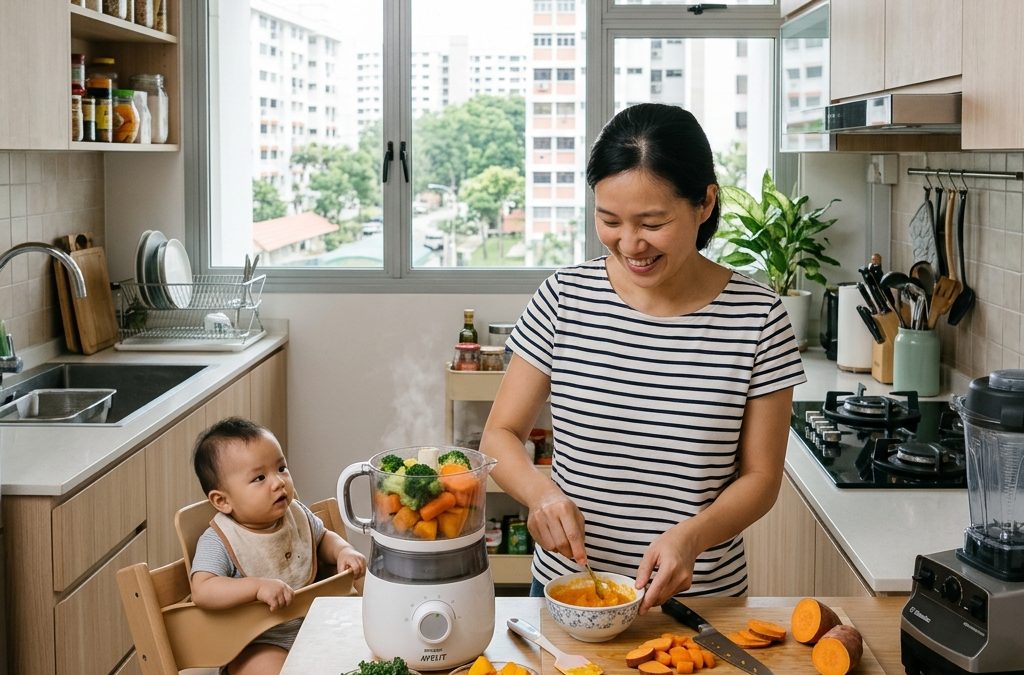
Transitioning an infant from a milk-only diet to solid foods represents one of the most significant milestones in a child’s first year. For many Singaporean families where both parents work, the responsibility for executing this transition often falls upon the shoulders of a Migrant Domestic Worker (MDW). At EELIT Agency Pte. Ltd., we recognize that this phase involves much more than just preparing porridge; it requires a deep understanding of nutritional timing, rigorous hygiene standards, and a high level of vigilance regarding food allergies. This guide provides a comprehensive roadmap for employers to train and guide their domestic helpers through the weaning process, ensuring the baby’s safety and health remain the top priority while complying with the latest caregiving standards in Singapore.
Understanding the Modern Caregiving Framework and MOM Regulations
As we move toward 2026, the Ministry of Manpower (MOM) in Singapore is increasingly emphasizing the professionalization of domestic caregiving. New regulatory frameworks are being designed to ensure that MDWs tasked with infant care possess the specific skills required for such a high-stakes role. For employers, this means that hiring a helper is no longer just about general housework; it is about finding a caregiver who can adhere to strict medical and nutritional guidelines. EELIT Agency stays ahead of these shifts by prioritizing candidates with demonstrated experience or a high capacity for learning specialized infant care protocols. We encourage employers to view the weaning process as a collaborative effort where clear instructions and structured training are the foundation of a successful working relationship.
The 2026 vision for domestic employment in Singapore focuses heavily on the well-being of both the employee and the dependents. This involves ensuring the helper is not overwhelmed and has access to clear, written guidelines. When a helper is tasked with introducing solids, the employer must ensure she understands the risks of choking and allergic reactions. This is not merely a household chore but a specialized caregiving task that requires patience and focused attention. By establishing a culture of safety and education within the home, Singaporean families can ensure their children thrive while their helpers feel confident and supported in their duties.
Identifying the Right Time to Start Weaning
The Health Promotion Board (HPB) of Singapore generally recommends starting solid foods around the six-month mark. However, every infant develops at a different pace. It is essential for the helper to observe the baby closely for signs of readiness. These signs include the baby being able to sit up with minimal support, having good head and neck control, and showing a distinct interest in what others are eating. Another critical sign is the disappearance of the tongue-thrust reflex, where the baby no longer automatically pushes food out of their mouth with their tongue.
Employers should instruct their helpers to report these developmental cues immediately. If the helper notices the baby reaching for spoons or watching intently during family mealtimes, these are indicators that the digestive system may be ready for more than just breast milk or formula. However, the introduction of solids should never be rushed. Starting too early can lead to digestive distress or an increased risk of allergies, while starting too late may result in iron deficiencies. Coordination between the employer, the helper, and the pediatrician is necessary to determine the exact start date.
The Progression of Textures and Flavors
The transition to solids is a gradual journey that moves from smooth liquids to thick textures. Initially, the helper should prepare single-ingredient purees that are slightly thicker than milk. Common starters in Singaporean households include white bait porridge, blended pumpkin, or mashed avocado. The goal during the first few weeks is not calorie consumption but rather familiarizing the infant with the sensation of swallowing something other than liquid. The helper must be taught to use a soft-tipped silicone spoon and to offer food in very small amounts, allowing the baby to set the pace.
As the baby grows more comfortable, usually between seven to nine months, the texture should transition to lumpy mashes and finely minced foods. This stage is vital for developing the jaw muscles and teaching the baby how to chew. The helper should avoid over-blending food at this stage. Instead of using a mechanical blender, she can use a fork to mash soft-cooked vegetables or proteins like threadfin (ikan kurau). By ten to twelve months, most infants can begin eating soft finger foods and chopped family meals, provided they do not contain added salt or sugar. EELIT Agency recommends that employers provide a weekly meal plan to the helper to ensure a balanced intake of iron, zinc, and vitamins.
The Golden Rule of Allergy Safety: The Three-Day Wait
Food allergies are a major concern for new parents, and the domestic helper is often the first person to witness an allergic reaction. The most effective way to identify a food allergy is the “Three-Day Rule.” This protocol requires that only one new food be introduced at a time, with a three-day gap before another new ingredient is added. This allows parents and helpers to isolate the cause if a reaction occurs. For example, if the helper introduces sweet potato on Monday, she should not introduce chicken until Thursday. During those three days, she should continue serving the sweet potato along with previously “safe” foods.
Common allergens in the Singaporean context include peanuts, eggs, soy, wheat, shellfish, and certain types of fish. While modern pediatric advice suggests that early introduction of these allergens can actually prevent allergies, it must be done under strict supervision. The helper must be briefed on exactly which ingredient is being introduced and what signs to look for. If a family has a history of severe allergies, the employer may choose to handle the first few tastes of high-risk foods themselves, delegating the subsequent feedings to the helper once the food is proven safe.
Recognizing and Reacting to Allergic Reactions
A domestic helper must be trained to identify both mild and severe allergic reactions. Mild symptoms might include a sudden rash or hives around the mouth, a runny nose, or a few spots of eczema on the body. More serious signs include vomiting, diarrhea, or swelling of the lips and tongue. The most critical and life-threatening reaction is anaphylaxis, characterized by difficulty breathing, wheezing, or a pale, floppy appearance. In such cases, every second counts, and the helper must know exactly who to call and what immediate actions to take.
EELIT Agency advises all employers to post an emergency contact list and a “Food Allergy Action Plan” in a visible spot in the kitchen. This list should include the numbers for the nearest clinic, the parents’ mobile numbers, and emergency services (995). The helper should be instructed that if she observes any swelling of the face or difficulty breathing, she must stop feeding the child immediately and call for help. Having a clear, written protocol removes the element of panic and ensures that the helper can act decisively to protect the infant.
Kitchen Hygiene and Safe Food Preparation
Infant immune systems are still developing, making them highly susceptible to foodborne illnesses. The domestic helper plays a vital role in maintaining a sterile environment for food preparation. This begins with thorough handwashing before handling any baby food or utensils. All cooking equipment, including blenders, steaming baskets, and storage containers, should be washed with baby-safe detergent and, if possible, sterilized or scalded with hot water. Cross-contamination must be avoided at all costs; the helper should use a separate cutting board and knife for the baby’s raw meats and vegetables.
Proper storage is equally important. If the helper prepares food in batches, she must understand how to cool the food quickly and store it in the refrigerator or freezer immediately. Cooked food should not sit at room temperature for more than two hours. When reheating food, the helper must ensure it is piping hot to kill any bacteria, then allowed to cool to a safe temperature before serving. She should always test the temperature of the food on her own wrist before offering it to the baby. EELIT Agency emphasizes these hygiene standards during our screening and briefing processes, as they are non-negotiable aspects of infant care.
Choking Hazards vs. Normal Gagging
One of the biggest fears for both helpers and parents is the risk of choking. It is essential to distinguish between gagging and choking. Gagging is a normal, loud, and messy part of learning how to eat. The baby may cough, turn slightly red, or make retching sounds. This is the body’s natural defense mechanism pushing food forward. The helper should stay calm, watch the baby, and allow them to clear the food themselves. Interfering or sticking a finger in the baby’s mouth during a gagging episode can actually push the food further back and cause a real choking incident.
Choking, on the other hand, is silent. The baby will be unable to cry, cough, or breathe, and their skin may turn blue or purple. This is a medical emergency. To prevent choking, the helper must ensure that all high-risk foods are prepared safely. This means cutting cherry tomatoes and grapes lengthwise into quarters, avoiding whole nuts, and ensuring that hard vegetables like carrots are steamed until they are soft enough to be smashed between two fingers. The helper should never leave the baby unattended while they are eating, even for a moment. Constant supervision is the only way to ensure immediate intervention if a choking event occurs.
Establishing a Consistent Feeding Routine and Log
Consistency is key to a successful weaning journey. The helper should follow a predictable schedule for meals, usually starting with one meal a day and gradually increasing to three. This helps the baby’s digestive system adapt and creates a sense of security. Employers should provide the helper with a “Feeding Log” or a notebook where she records what the baby ate, how much was consumed, and any observations regarding the baby’s reaction to the food. This log becomes a vital communication tool between the working parents and the caregiver.
The log should include columns for the time of the meal, the ingredients used, any signs of skin irritation, and changes in bowel movements. If the baby refuses a particular food, the helper should note it down without forcing the child to eat. Forcing food can lead to a negative association with mealtime and pickiness later on. Instead, the helper should be encouraged to try that specific food again a few days later, as it often takes multiple exposures for a baby to accept a new flavor. This structured approach allows parents to feel involved in the process even when they are physically at the office.
Navigating Multi-Generational Input and Cultural Differences
In many Singaporean households, grandparents play an active role in child-rearing. This can sometimes lead to conflicting instructions for the domestic helper. A grandmother might suggest adding salt or sugar to make the food tastier, or she might want to introduce certain traditional herbs before the baby is six months old. These conflicting messages can be confusing for the helper and may compromise the baby’s health guidelines. It is the employer’s responsibility to act as the primary authority and ensure that the helper follows the pediatrician’s advice and the family’s established weaning plan.
The employer should have a clear conversation with all family members to align on the weaning strategy. The helper should be instructed that while she must remain respectful to the elderly, she must follow the parents’ specific instructions regarding the baby’s diet. By providing the helper with written “House Rules” for infant feeding, the employer provides her with a reference point to navigate these social dynamics within the household. Clear communication prevents misunderstandings and ensures that the baby receives a consistent nutritional message.
How EELIT Agency Supports Your Weaning Journey
At EELIT Agency Pte. Ltd., we understand that the first few months of weaning can be a stressful time for any family. Our role is to provide you with a domestic helper who is not just a pair of hands, but a capable partner in your child’s development. We conduct rigorous interviews to assess a candidate’s experience with infant care and their ability to follow complex safety protocols. We believe that a well-matched helper, combined with the right training and resources, can make the weaning process a joyful and bonding experience for the entire family.
Beyond the initial placement, EELIT Agency offers ongoing support and resources to help employers and helpers navigate the complexities of childcare. Whether it is providing advice on how to structure a feeding schedule or helping to facilitate communication between the employer and the helper, we are committed to the long-term success of the employment relationship. We recognize that as your child grows, the needs of your household will change, and we are here to ensure your domestic helper has the skills and support necessary to adapt to those changes. By choosing EELIT, you are choosing a partner dedicated to the safety, health, and happiness of your Singaporean home.
In conclusion, introducing solid foods is a significant responsibility that requires a combination of nutritional knowledge, safety awareness, and consistent communication. By empowering your domestic helper with the right training and a clear framework, you turn a potential source of stress into a successful milestone. Remember that patience is essential; both your baby and your helper are learning a new skill. With the right preparation and the support of a trusted agency like EELIT, you can ensure that your child’s transition to solids is safe, healthy, and full of positive new experiences.
Connect with EELIT Placement Specialists
Speak directly with our senior placement consultants for personalized bio matching, MOM Work Permit processing, and household caregiving support across Singapore:
Corporate Headquarters Placement Consultation
Corporate HQ Priority WhatsApp: +65 9100 1610
Juliet (Senior Consultant): Chat with Juliet (+65 9168 2493) |
Joey (Senior Consultant): Chat with Joey (+65 8725 2891)
HQ Office Telephone (Hotline / Voice Call Only): +65 6320 3826
Islandwide Branch WhatsApp Lines
Orchard (Far East Shopping Centre): +65 9478 2786
Hougang: +65 8043 9823
Yishun: +65 8090 3168