
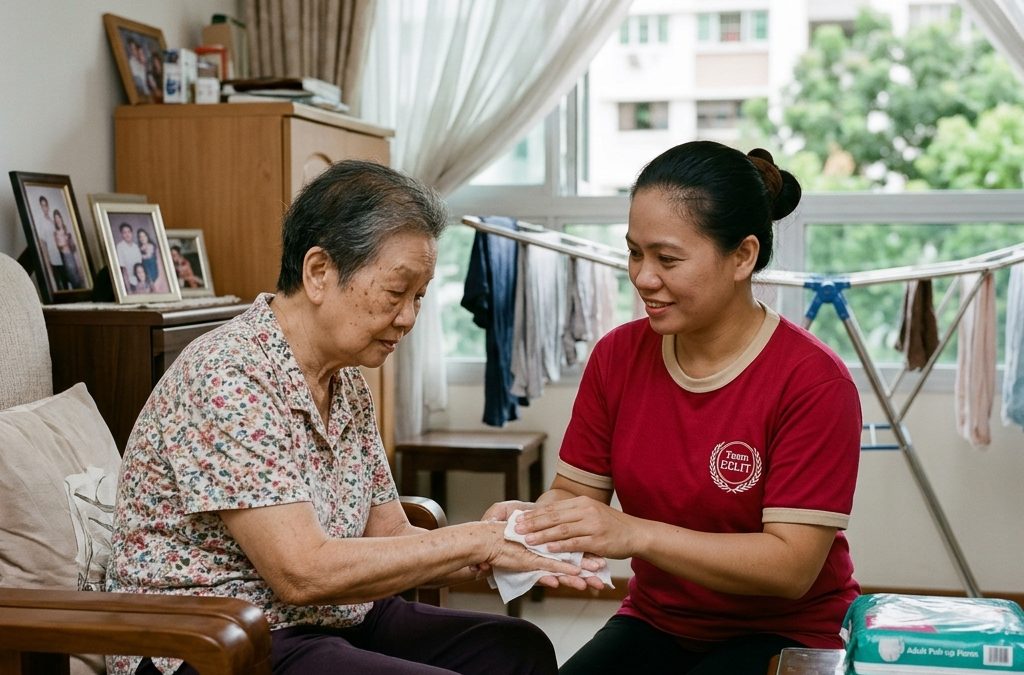
As Singapore navigates the challenges of a rapidly aging population, many households find themselves managing the complex needs of elderly parents while balancing full-time careers. Incontinence is one of the most physically demanding and emotionally sensitive aspects of elder care that a Migrant Domestic Worker (MDW) will face. At EELIT Agency, we recognize that senior incontinence care is not just a cleaning task; it is a clinical and ethical responsibility that directly impacts the health, dignity, and longevity of your loved ones. This guide provides a comprehensive roadmap for Singaporean families to establish high-standard hygiene protocols that safeguard skin integrity and honor the privacy of our seniors.
The Regulatory Landscape: MOM 2026 and Employer Responsibilities
The Singapore Ministry of Manpower (MOM) is progressively enhancing the standards for elder care training among domestic helpers. By 2026, we expect even more stringent guidelines regarding the specialized skills required for MDWs caring for high-dependency seniors. Employers must understand that tasks involving incontinence care fall under a specialized category of domestic work. It requires more than just basic household chores; it requires a level of medical literacy and physical capability.
1. Employers are responsible for ensuring their domestic helper is physically capable and emotionally prepared for the rigors of elder care. Incontinence care often involves heavy lifting, repositioning, and exposure to bodily fluids, which can lead to helper burnout if not managed with proper training and support.
2. Under the evolving MOM framework, the emphasis is moving toward certified training. EELIT Agency advocates for all helpers placed in homes with incontinent seniors to undergo specialized caregiving courses. This protects the employer from liability and ensures the senior receives professional-grade care that prevents secondary complications like pressure sores or urinary tract infections (UTIs).
3. Families must also respect the rest days and mental health of the helper. Managing incontinence 24/7 is exhausting. The 2026 focus will likely reinforce the necessity of sustainable caregiving arrangements, where the helper is not the sole person responsible for the senior’s well-being without adequate breaks or mechanical aids.
Understanding Incontinence-Associated Dermatitis (IAD)
The most immediate physical threat to a senior with incontinence is the breakdown of the skin, a condition known as Incontinence-Associated Dermatitis (IAD). In Singapore’s humid climate, the risk of skin maceration is significantly higher. When skin is exposed to urine and feces, the protective acid mantle is compromised. The pH level of the skin rises, making it vulnerable to bacterial and fungal infections.
1. IAD manifests as redness, inflammation, and sometimes blistering or peeling. To a senior, this is incredibly painful. To a caregiver, it is a sign that the current hygiene protocol is failing. It is often mistaken for a pressure sore, but the management is different. IAD covers a wider area and is caused by moisture, whereas pressure sores are caused by a lack of blood flow due to constant pressure.
2. Prevention is the only sustainable strategy. Once the skin breaks, it becomes a gateway for infections like cellulitis or sepsis, which frequently lead to hospitalizations. For a senior, a simple skin tear can turn into a months-long recovery process. This is why EELIT Agency stresses the importance of “dry-feel” technologies in diapers and the consistent use of barrier creams.
3. Helpers must be taught to inspect the skin during every diaper change. They should look for changes in color, temperature, or texture. If the skin stays white after being pressed (blanching), it is usually healthy; if it stays red or dark, it indicates deep tissue stress that needs immediate attention.
The EELIT Standard: Daily Hygiene and Changing Protocols
Consistency is the foundation of effective elder care. A domestic helper should follow a strict routine to ensure the senior never remains in a wet or soiled diaper for longer than necessary. We recommend a “two-hour check” rule, even if the diaper claims to have high absorbency.
1. Preparation and Privacy: Before starting the change, the helper must gather all supplies: fresh diapers, pH-balanced wet wipes or soft cloths, warm water, a disposal bag, and barrier cream. The room must be private. Closing the door or using a privacy screen is a non-negotiable step in maintaining the senior’s dignity. The helper should explain what they are doing in a calm, respectful tone, even if the senior has dementia.
2. The Cleaning Process: The senior should be rolled gently to one side. Never pull or tug on the skin. Use a “front-to-back” wiping motion to prevent fecal matter from entering the urinary tract, which is the primary cause of UTIs in elderly women. If using soap, it must be a no-rinse, pH-balanced cleanser. Harsh soaps used for bathing should never be used on the sensitive perineal area.
3. Drying and Aeration: After cleaning, the skin must be patted dry, never rubbed. Friction is a major contributor to skin tears. If possible, allow the skin to air-dry for a few minutes before applying products. This brief period of aeration is vital in our tropical humidity to prevent fungal growth.
4. Barrier Application: Apply a thin, even layer of a zinc oxide-based barrier cream or a silicone-based skin protectant. This creates a physical wall between the skin and the moisture of the next voiding. The helper should be instructed not to use excessive amounts, as too much cream can clog the pores of the diaper, reducing its absorbency.
Dignity and Emotional Intelligence in Caregiving
Incontinence is often a source of deep shame for the elderly. They may become combative, withdrawn, or attempt to hide their accidents. A helper who is impatient or shows disgust will exacerbate these feelings, leading to a breakdown in the relationship. At EELIT, we screen for temperament to ensure our caregivers possess the necessary empathy for these situations.
1. Language matters. Use terms like “briefs” or “protective underwear” instead of “nappy” or “diaper,” which can feel infantilizing. The goal is to make the senior feel like an adult who is receiving assistance, not a child being managed.
2. Involve the senior in the process. If they are physically able, ask them to hold the fresh diaper or help adjust their clothing. This small inclusion gives them a sense of control over their body. If the senior is resistant, the helper should be trained in redirection techniques—using soft music or engaging in light conversation to distract from the discomfort of the change.
3. Odor management is a significant part of dignity. A home that smells like urine affects the morale of the entire family and the senior’s willingness to have visitors. Helpers should use high-quality disposal bins with odor-sealing lids and ensure that soiled items are removed from the house immediately. Using air purifiers or mild essential oil diffusers can help maintain a pleasant environment without using overwhelming chemical sprays.
Optimizing Equipment and Environment
The choice of products can make or break a caregiving routine. In Singapore, there is a wide range of incontinence products, and the cheapest option is rarely the most cost-effective in the long run. Cheap diapers often leak, lead to more frequent changes, and cause skin irritation that results in expensive medical bills.
1. High-absorbency briefs with “re-fastenable” tabs are essential for bedbound seniors. For more active seniors, pull-up pants are better as they encourage independent toileting. The helper should be trained to check the wetness indicator—a line on the outside of many modern diapers that changes color when full.
2. Bed protection is equally important. Use waterproof mattress protectors and disposable underpads (blue pads). These provide an extra layer of security during the night and make cleaning up leaks much easier. However, the helper must ensure the underpad is flat; wrinkles in the pad can cause skin irritation or even pressure sores if the senior lies on them for too long.
3. Clothing should be modified for ease of access. Adaptive clothing with back snaps or elastic waistbands can significantly reduce the time and physical effort required for a change. This minimizes the time the senior has to be exposed and reduces the physical strain on the helper’s back.
Nutrition and Hydration Management
It is a common mistake for families to limit a senior’s water intake to reduce the frequency of urination. This is dangerous and counterproductive. Dehydration leads to concentrated urine, which is more irritating to the skin and increases the risk of UTIs and kidney stones. It can also cause confusion and dizziness, leading to falls.
1. The helper should encourage regular sips of water throughout the day, focusing on the hours between 7:00 AM and 5:00 PM. After 6:00 PM, fluid intake can be tapered off slightly to reduce the need for nighttime changes, but it should never be stopped entirely.
2. Fiber-rich diets are necessary to prevent constipation. Constipation puts pressure on the bladder and can worsen urinary incontinence. The helper should be taught to prepare meals with adequate vegetables and fruits, following the nutritional guidelines provided by the family or a dietitian.
3. Avoiding bladder irritants like caffeine (kopi/teh) or overly spicy foods in the evening can help manage the frequency of voiding. The MDW should keep a simple log of the senior’s intake and output for the first few weeks of care to help the family identify patterns and discuss them with a doctor.
Real-World Scenarios and Troubleshooting
Caregiving rarely goes perfectly according to plan. Helpers need to be prepared for common hurdles that occur in Singaporean households.
1. The Refusal to Change: It is common for seniors with dementia to refuse a change. In these moments, the helper should not force the issue, which could lead to injury. Instead, she should step away for ten minutes and try again with a different approach. Sometimes, having the employer or another family member gently suggest the change can break the impasse.
2. Incontinence in Public: This is the biggest fear for many active seniors. The helper should always carry a “go-bag” containing a full change of clothes, wipes, diapers, and plastic bags. If an accident occurs while at a hawker center or mall, the helper must remain calm and handle the situation discreetly, ensuring the senior is cleaned and comforted without drawing attention.
3. Nocturnal Agitation: Some seniors experience “sundowning,” where they become more confused or agitated in the evening. This makes nighttime changes difficult. In such cases, using a higher-absorbency “overnight” diaper can reduce the need for multiple changes during the night, allowing both the senior and the helper to get better rest.
The EELIT Advantage: Supporting Families and Helpers
At EELIT Agency, we do not just place a helper in your home and walk away. We understand that senior incontinence care is a long-term commitment that requires ongoing support. Our role as a licensed Singapore Employment Agency is to facilitate a sustainable partnership between the family and the MDW.
1. Targeted Matching: When you approach us with a need for elder care, we look for helpers who have either prior experience in nursing environments or have demonstrated the patience and physical stamina required for high-dependency cases. We screen candidates for their attitude toward hygiene tasks, ensuring they view caregiving as a professional and noble calling.
2. Training Resources: We provide access to training modules that cover the specifics of skin care and hygiene. We encourage our employers to send their helpers for hands-on workshops where they can learn proper lifting techniques and the clinical aspects of preventing IAD and pressure sores.
3. Counseling and Mediation: If a helper feels overwhelmed by the demands of incontinence care, or if a family is unsure if the care is being handled correctly, EELIT offers mediation services. We help troubleshoot routines, suggest environmental changes, and ensure that the lines of communication remain open.
4. Post-Placement Support: As your senior’s condition changes—perhaps progressing from occasional accidents to full incontinence—EELIT is here to advise on how to adjust the helper’s workload and responsibilities to ensure the highest standard of care is maintained throughout the senior’s journey.
Managing senior incontinence is a journey that requires the right tools, a structured protocol, and a compassionate heart. By implementing these skin integrity and dignity protocols, you are not just managing a medical condition; you are preserving the quality of life for your parents. A well-trained, empathetic domestic helper, supported by a professional agency like EELIT, becomes an invaluable partner in your family’s caregiving team, ensuring that your loved ones age with the grace and respect they deserve in the comfort of their own home.
Connect with EELIT Placement Specialists
Speak directly with our senior placement consultants for personalized bio matching, MOM Work Permit processing, and household caregiving support across Singapore:
Corporate Headquarters Placement Consultation
Corporate HQ Priority WhatsApp: +65 9100 1610
Juliet (Senior Consultant): Chat with Juliet (+65 9168 2493) |
Joey (Senior Consultant): Chat with Joey (+65 8725 2891)
HQ Office Telephone (Hotline / Voice Call Only): +65 6320 3826
Islandwide Branch WhatsApp Lines
Orchard (Far East Shopping Centre): +65 9478 2786
Hougang: +65 8043 9823
Yishun: +65 8090 3168