
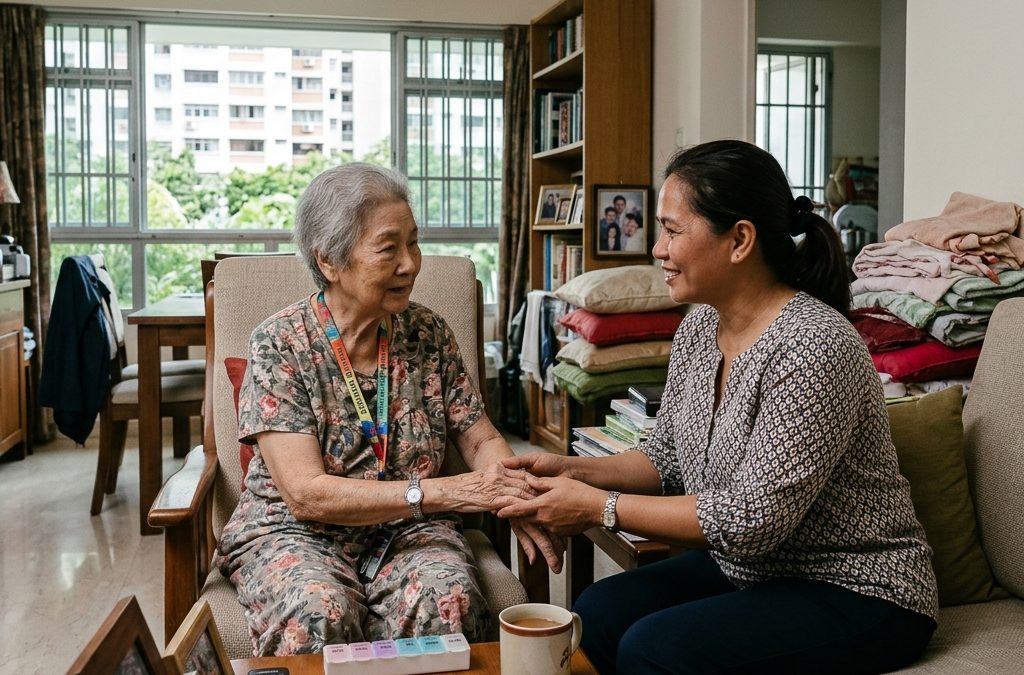
Singapore is currently navigating a significant demographic shift, often referred to as the silver tsunami. As our population ages, more families are finding themselves in a position where they must balance professional responsibilities with the intensive demands of caring for an elderly parent. When that parent is diagnosed with dementia, the care requirements escalate from simple assistance to specialized, 24-hour supervision. For many Singaporean households, hiring a domestic helper specifically trained for eldercare—often termed an eldercare maid—is the most practical solution. However, this is not a standard hiring process. It requires a deep understanding of Ministry of Manpower (MOM) regulations, a clear grasp of the neurological challenges involved, and a commitment to ongoing training. This guide provides an exhaustive roadmap for families looking to secure the right support through EELIT Agency, ensuring that your loved one receives the dignity and care they deserve while maintaining the harmony of your home.
Understanding the Role of an Eldercare Maid in Dementia Management
Dementia is a progressive condition that affects memory, thinking, and social abilities enough to interfere with daily life. In the context of a Singaporean household, an eldercare maid is not just a domestic worker who handles chores; she is a frontline caregiver. Her primary responsibility shifts from cleaning and cooking to monitoring safety, managing medication, and providing cognitive stimulation. This role requires a specific temperament characterized by extreme patience and emotional resilience. Unlike standard domestic work, dementia care is unpredictable. A senior may be perfectly calm in the morning and become agitated or confused by late afternoon, a phenomenon commonly known as sun-downing.
When you hire through EELIT Agency, we emphasize that the helper must understand the stages of dementia. In the early stages, the helper might simply provide reminders for appointments or medication. As the condition progresses to the middle and late stages, the role evolves into helping with Activities of Daily Living (ADLs), such as bathing, dressing, and feeding. The helper also becomes the eyes and ears for the family, noticing subtle changes in the senior’s health or behavior that might indicate an underlying infection or a decline in cognitive function. Recognizing that this is a specialized profession is the first step in a successful hiring journey.
Navigating the MOM Regulatory Framework and 2026 Outlook
The Ministry of Manpower (MOM) has consistently updated its policies to ensure that the quality of care in Singaporean homes remains high. As we approach 2026, the regulatory environment is becoming more focused on the competency of the Migrant Domestic Worker (MDW) and the readiness of the employer. Currently, all first-time employers must complete the Employer Orientation Programme (EOP) to understand their legal obligations. However, for those hiring a helper to care for a senior with dementia, the requirements are more nuanced. MOM and the Agency for Integrated Care (AIC) are increasingly encouraging employers to ensure their helpers undergo specialized training before or shortly after arrival.
By 2026, we anticipate even stricter guidelines regarding the placement of helpers in high-needs households. This may include mandatory certifications for helpers assigned to seniors with severe physical or cognitive disabilities. At EELIT Agency, we stay ahead of these shifts by vetting candidates who have already expressed an interest or have prior experience in geriatric care. It is also vital to note that the Work Permit conditions for these helpers remain strict; they are employed to work only at the address stated on the permit. For families who move their elderly parents between siblings’ homes, it is essential to notify MOM to ensure legal compliance and avoid heavy fines or the revocation of the work permit.
The Selection Process: Identifying the Right Candidate
Choosing a helper for a dementia patient goes beyond checking her previous employment history. At EELIT Agency, we look for “soft skills” that are often more important than the ability to cook or clean. Patience is the most critical attribute. A dementia patient may ask the same question twenty times in an hour or refuse to eat a meal they usually enjoy. A helper who lacks patience will quickly burn out, leading to a high turnover rate which is distressing for a senior who needs routine and familiar faces.
During the interview process, we recommend that families ask situational questions rather than simple “yes” or “no” queries. For example, ask the candidate how she would react if the senior becomes aggressive or accuses her of stealing something—a common symptom of dementia-related paranoia. Language proficiency is another major factor. In Singapore, many seniors only speak dialects like Hokkien, Teochew, or Cantonese. If the senior has lost their ability to speak English or Mandarin due to dementia, hiring a helper who can communicate in their native dialect, or one who is willing to learn basic phrases quickly, is essential for reducing the senior’s frustration and anxiety.
Specialized Training and the Caregivers Training Grant (CTG)
Even a helper with prior experience will need training specific to your loved one’s needs. The Singapore government provides the Caregivers Training Grant (CTG), which offers a $200 annual subsidy to offset the cost of approved training courses for caregivers. This grant can be used to send your domestic helper for courses on dementia care, transfer techniques (moving a senior from bed to wheelchair), and basic first aid. EELIT Agency strongly advises all our clients to utilize this grant within the first three months of the helper’s employment.
Training should cover both the physical and psychological aspects of care. Physically, the helper needs to know how to prevent falls, which are a leading cause of hospitalization for seniors. Psychologically, she needs to learn “validation therapy”—a technique where the caregiver acknowledges the senior’s feelings rather than constantly correcting their reality. For instance, if a senior with dementia wants to “go home” while they are already at home, a trained helper knows not to argue. Instead, she might say, “Tell me about your home,” which redirects the conversation and calms the senior. This level of skill is what transforms a domestic worker into a professional eldercare provider.
Implementing Daily Protocols for Safety and Stability
Consistency is the cornerstone of dementia care. A chaotic environment leads to confusion and behavioral outbursts. Your eldercare maid should be tasked with maintaining a strict daily schedule that mirrors the senior’s lifelong habits. This includes fixed times for waking up, meals, medication, and sleep. A written daily log is a tool we often recommend to our families. This log should track food intake, bowel movements, sleep patterns, and any unusual behaviors. This data is invaluable when you take your parent to see their geriatrician.
Safety protocols in an HDB or private apartment must also be rigorous. The helper should be trained to ensure the environment is free of hazards. This involves removing scatter rugs that cause trips, ensuring the bathroom is dry, and keeping dangerous items like medications or sharp kitchen tools in locked cabinets. For seniors who tend to wander, the helper must be vigilant about keeping the front door locked. In Singapore, it is common to use smart locks or simple bells on doors to alert the helper if the senior attempts to leave the house unaccompanied. These practical steps, managed by the helper, create a safety net that allows the family to work without constant worry.
Managing Behavioral and Psychological Symptoms of Dementia (BPSD)
One of the most challenging aspects for any family is dealing with the behavioral changes that accompany dementia. These may include agitation, repetitive vocalizations, or even physical aggression. It is important for the family and the helper to understand that these behaviors are symptoms of the disease, not a reflection of the senior’s character. When these symptoms arise, the helper’s primary role is to remain calm. High emotions from the caregiver will only escalate the senior’s distress.
We teach our helpers the “ABC” method of behavior management. “A” stands for Antecedent (what triggered the behavior), “B” for the Behavior itself, and “C” for the Consequence (how the caregiver responded). By tracking these, the family can identify triggers. For example, if the senior becomes agitated every time the television is too loud, the helper learns to keep the volume low. Managing “sun-downing” is another critical skill. As evening approaches, the helper should close the curtains and turn on bright lights to minimize the confusion caused by shadows, keeping the senior engaged in a calm activity like listening to familiar music or folding laundry.
Communication Strategies for the Modern Singaporean Home
Effective communication is a two-way street involving the helper, the senior, and the employer. In many Singaporean households, there can be a “too many cooks in the kitchen” scenario where different family members give the helper conflicting instructions. To avoid this, we recommend designating one primary point of contact for the helper. This “care manager” within the family should be the one to discuss the senior’s progress and any changes in the care plan. This prevents the helper from feeling overwhelmed and ensures a clear line of authority.
When communicating with the senior, the helper should be taught to use short, simple sentences. Instead of saying, “It’s time to take your shower now so we can go to the doctor later,” she should say, “It’s time for a shower.” Breaking down tasks into single steps makes it much easier for someone with cognitive decline to follow along. Non-verbal communication is equally powerful. A gentle touch on the hand or maintaining eye level can make the senior feel safe and respected. EELIT Agency provides guidance on these nuances to ensure that the relationship between the helper and the senior is built on trust rather than fear or frustration.
Preventing Caregiver Burnout and Managing Helper Wellbeing
Caring for a dementia patient is a marathon, not a sprint. The risk of burnout for an eldercare maid is significantly higher than for those performing general housework. If a helper is exhausted, the quality of care drops, and the risk of accidents increases. Employers must ensure that their helper receives adequate rest. MOM regulations mandate a weekly rest day, and while some employers choose to “buy back” the rest day with extra pay, we strongly discourage this for dementia caregivers. The helper needs time away from the demanding environment to recharge her mental health.
In addition to physical rest, emotional support is vital. Encourage your helper to communicate her feelings. If she has had a particularly difficult day with the senior, acknowledge her hard work. A little appreciation goes a long way in maintaining her motivation. At EELIT Agency, we also remind families that the helper is a human being with her own family back home. Providing her with time to call her children or parents can significantly improve her morale, making her a more patient and attentive caregiver for your loved one.
Financial Assistance and Subsidies for Singaporean Families
The cost of hiring an eldercare maid can be a concern for middle-income families. Fortunately, the Singapore government offers several layers of financial support. Beyond the Caregivers Training Grant mentioned earlier, there is the Home Caregiving Grant (HCG). This is a monthly cash payout to help families with the costs of caring for loved ones with moderate to severe disabilities, which includes many dementia patients. The amount varies based on the household’s per capita income, but it can significantly offset the salary of a domestic helper.
Furthermore, employers of MDWs who are caring for a senior aged 67 or older are eligible for the concessionary Foreign Domestic Worker Levy. Instead of the standard monthly levy, you will pay a significantly reduced rate. There are also tax reliefs available, such as the Grandparent Caregiver Relief, though this typically applies to those whose parents are looking after their children. Understanding these financial levers is essential. When you work with EELIT Agency, we help you navigate these applications and ensure you are maximizing the support available from the state to make home care sustainable in the long term.
Why Professional Matching Matters: The EELIT Agency Advantage
Hiring a helper through a random search or an unspecialized agency often leads to a mismatch in skills and expectations. Dementia care is too sensitive for trial and error. At EELIT Agency, we pride ourselves on a rigorous matching process. We don’t just look at a candidate’s bio-data; we assess her personality, her history of caregiving, and her willingness to undergo specialized Singapore-based training. We understand the local context—the layout of HDB flats, the cultural expectations of Singaporean families, and the specific healthcare resources available in our city-state.
Our support doesn’t end once the helper arrives at your doorstep. we offer post-placement follow-ups to see how the helper is adjusting to the senior’s temperament. If there are teething issues in the first few months, we provide mediation and advice to resolve them. We act as your partner in caregiving, ensuring that the helper we provide is an asset to your family. Our goal is to create a stable, long-term arrangement where the senior can age in place gracefully, surrounded by their own belongings and memories, under the watchful eye of a competent professional.
Closing Thoughts for the Journey Ahead
Welcoming an eldercare maid into your home to care for a parent with dementia is a major decision that requires both heart and head. It is about more than just fulfilling a need; it is about honoring the person your parent was and protecting the person they are today. While the road of dementia care is often paved with challenges, you do not have to walk it alone. By leveraging the right training, understanding the legal landscape, and choosing an agency that understands the gravity of your situation, you can provide a high quality of life for your loved one.
As the landscape of eldercare in Singapore continues to evolve toward 2026 and beyond, staying informed and proactive is your best strategy. EELIT Agency remains committed to supporting Singaporean families through these transitions. With the right helper, the right mindset, and the right support system, managing dementia at home becomes not just a possibility, but a sustainable and compassionate reality for your family.
Connect with EELIT Placement Specialists
Speak directly with our senior placement consultants for personalized bio matching, MOM Work Permit processing, and household caregiving support across Singapore:
Corporate Headquarters Placement Consultation
Corporate HQ Priority WhatsApp: +65 9100 1610
Juliet (Senior Consultant): Chat with Juliet (+65 9168 2493) |
Joey (Senior Consultant): Chat with Joey (+65 8725 2891)
HQ Office Telephone (Hotline / Voice Call Only): +65 6320 3826
Islandwide Branch WhatsApp Lines
Orchard (Far East Shopping Centre): +65 9478 2786
Hougang: +65 8043 9823
Yishun: +65 8090 3168