
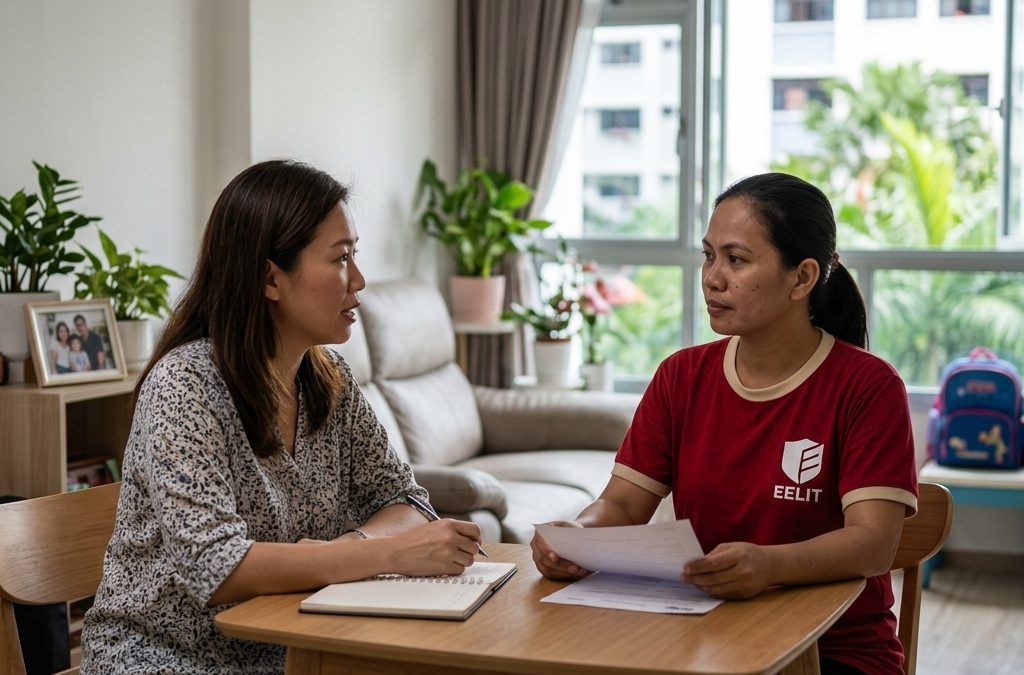
Managing the absence of a Migrant Domestic Worker (MDW) is often the most stressful period for a Singaporean household, particularly those juggling the demands of young children and elderly parents. As we move into 2026, the expectations around helper home leave have evolved, requiring employers to be more strategic, legally compliant, and empathetic. This guide serves as the definitive playbook for navigating both planned home leave and the sudden, high-pressure demands of family emergencies back in your helper’s home country.
The Legal Framework: MOM Regulations and the 2026 Context
In Singapore, the Ministry of Manpower (MOM) provides clear guidelines on the treatment of domestic workers, but many employers still find themselves confused by the nuances of home leave. By 2026, the emphasis on worker well-being has become even more central to the employment contract. It is essential to understand that while there is no statutory requirement for a set number of paid annual leave days for helpers in the same way there is for office workers under the Employment Act, the standard practice and the individual employment contract govern this space.
Most standard contracts facilitated by EELIT Agency include a provision for 15 days of paid home leave upon the completion of a two-year contract. If the helper chooses to renew her contract for another two years, she is entitled to this leave. The employer is responsible for the cost of the return airfare, including a check-in luggage allowance. This is not a benefit you can opt out of; it is a contractual obligation that ensures the worker can rejuvenate and maintain ties with her family, which directly impacts her productivity and mental health when she returns to your service.
Furthermore, employers must be aware of the “Home Leave Gratuity” or similar performance-based incentives that are becoming common in 2026. While not a legal requirement, many families now offer a small bonus or travel allowance to ensure their helper feels valued. This proactive approach reduces the risk of the helper looking for a new employer during her leave period, a concern that remains top-of-mind for many Singaporean families.
Planning for Scheduled Home Leave: A Six-Month Roadmap
A smooth home leave experience begins months before the helper reaches the airport. We recommend starting the conversation at least six months in advance. This gives the household ample time to arrange for alternative care and allows the helper to plan her time with her family effectively. The first step is to confirm the dates and check the validity of her passport and Work Permit. Ensure her passport has at least six months of validity remaining from the date of her intended return to Singapore.
Once dates are set, the financial planning begins. As an employer, you should book the flights early to secure better rates. Ensure that the insurance coverage is active for the duration of her trip. While the MOM mandatory insurance covers her while she is in Singapore, you may want to consider a travel add-on or check if your current policy covers her during her time abroad. This is a small price to pay for the peace of mind that comes with knowing you are protected from unforeseen medical liabilities while she is away.
The third step involves the “Household Handover Manual.” If you have elderly family members with complex medication schedules or young infants, you cannot rely on memory. We advise employers to work with their helper to document her daily routines, secret recipes that the children love, and specific care instructions. This manual will be the lifeline for whoever steps in to cover the chores, whether it is a family member or a temporary care service.
Navigating Family Emergencies: When the Unexpected Happens
The most challenging scenario for any employer is the sudden phone call from the helper’s home country. A sick parent, a natural disaster, or a family death requires immediate action. In these moments, the employer must balance household needs with human compassion. The 2026 guidelines encourage a “Compassionate Leave” policy. While the contract might not explicitly mandate paid leave for emergencies, granting 3 to 5 days of paid leave as a gesture of goodwill often cements the loyalty of a good helper.
When an emergency arises, the first step is verification. While it feels uncomfortable to ask for proof during a crisis, it is a standard procedure to request a copy of a medical certificate or a death certificate later. This helps prevent “simulated emergencies” which, while rare, can occur. At EELIT Agency, we assist our clients in communicating with the helper’s family or local agents in the home country to verify the situation quickly and respectfully.
If the emergency requires the helper to stay back for an extended period, you must discuss the terms of “Unpaid Leave of Absence.” This should be documented in writing to avoid disputes later. Clearly state the expected return date and the consequences if she is unable to return by that time. This document protects your right to hire a replacement if the household situation becomes unsustainable without help.
Managing Financial Obligations and Levy Waivers
A common question we receive at EELIT Agency is whether the employer still needs to pay the Foreign Domestic Worker Levy while the helper is on home leave. The answer is yes, but you are eligible for a levy waiver. You can apply for a waiver if the helper is away for at least seven consecutive days. This application is done through the Central Provident Fund (CPF) website under the “Levy Waiver” section.
To qualify for the waiver, you must ensure that the helper’s departure and arrival are properly recorded by the Immigration and Checkpoints Authority (ICA). You do not need to manually cancel the Work Permit during her leave; simply keeping it active is sufficient. The waiver amount is calculated based on the number of days she is out of the country, and the credit will usually be applied to your future levy bill. This is a crucial cost-saving measure that many new employers overlook.
Regarding her salary, if she is on her contractual 15-day home leave, she must be paid her full basic salary. If she requests additional time beyond the agreed period, that time is typically treated as unpaid leave. We suggest providing the helper with her salary for the current month before she departs, as she will likely need the funds for her travel and family expenses. However, ensure you have a clear record of this payment, ideally through a signed salary voucher or a digital transfer record.
The Care Gap Strategy: How to Survive Without a Helper
The “Care Gap” is the period when the household must function without its primary support system. For many Singaporean families, this is a wake-up call to the amount of work the helper actually does. To manage this period without burning out, we recommend a multi-pronged strategy. First, simplify the household chores. Use meal delivery services or “Tingkat” catering to eliminate the need for daily cooking and grocery shopping. This alone can save two hours of labor every day.
Second, if you have elderly parents, consider “Respite Care” services. Many eldercare centers in Singapore offer short-term stays or day-care services that can bridge the gap while your helper is away. For families with children, coordinating with grandparents or arranging for increased hours at childcare centers can provide the necessary breathing room. It is also an excellent time to involve older children in household chores, teaching them responsibility and giving them a glimpse into the effort required to run a home.
Third, consider hiring a part-time cleaner for heavy-duty tasks like ironing and mopping. While these cleaners cannot provide the full range of services a stay-in helper does, they can handle the physical labor that often exhausts working parents. EELIT Agency can often provide recommendations for reputable part-time services that comply with MOM regulations, ensuring you don’t inadvertently hire illegal labor during your helper’s absence.
Documentation and Compliance: The “Pre-Departure Checklist”
To avoid legal complications or misunderstandings, a formal pre-departure process is vital. We recommend that every employer prepare a “Home Leave Agreement” or a simple Letter of Undertaking. This document should be signed by both the employer and the helper. It should clearly state the departure date, the agreed-upon return date, the flight details, and the salary arrangements (including any advances given).
Another critical piece of documentation is the Work Permit itself. The helper must carry her original Work Permit card with her. She will need it to clear immigration both when leaving and when re-entering Singapore. Remind her to keep the card in a safe place and perhaps keep a digital photo of it on her phone. Additionally, ensure she has your contact information and the contact information for EELIT Agency saved in her phone in case she encounters issues at the airport or has trouble with her return flight.
For employers of helpers from certain countries, like the Philippines, there may be additional requirements such as the Overseas Employment Certificate (OEC). While the processes are becoming more digitized in 2026, it is still necessary to ensure the helper has registered her travel with her respective embassy or labor office. This ensures she won’t face delays when trying to board her return flight to Singapore.
Mitigating the Risk of Non-Return
The fear that a helper will go on home leave and never return is a common one. While most helpers value their jobs and return as planned, life circumstances can change. To mitigate this risk, communication is your strongest tool. A helper who feels respected and fairly treated is much more likely to return than one who feels overworked or isolated. In the weeks leading up to her leave, check in with her. Ask about her plans and her family. This builds the emotional bond that keeps the employment relationship strong.
From a technical standpoint, if a helper does not return by the agreed date, you should first attempt to contact her through all available channels—phone, messaging apps, and social media. If you cannot reach her after several days, contact EELIT Agency. We can assist in reaching out to her next-of-kin or the local agent in her home country. If it becomes clear she is not returning, you will need to cancel her Work Permit via the MOM website. Doing so will discharge your security bond liability, provided you have not breached any of the Work Permit conditions.
It is important to note that the security bond is generally not forfeited if the helper fails to return from home leave, as long as you have followed all the correct procedures and made a reasonable effort to ensure she boards her flight back. Having a signed Home Leave Agreement is your best evidence that you acted in good faith as an employer.
Reintegration: Welcoming Your Helper Back
When the helper returns, there is often a “re-entry period.” She may be jet-lagged, or she may be feeling the emotional weight of leaving her family again. It is wise to give her a day or two to settle in before expecting her to resume her full workload. Use this time to have a quick chat about her trip. Showing interest in her life back home goes a long way in rebuilding the working relationship.
Update her on any changes that happened while she was away. Perhaps the baby’s sleep schedule has changed, or a family member’s medication has been adjusted. Walk her through these changes patiently. A little bit of empathy during this transition phase prevents mistakes and helps her regain her rhythm quickly. Most employers find that after a successful home leave, the helper returns with renewed energy and a more positive outlook, which benefits the entire household.
How EELIT Agency Supports Your Family Journey
At EELIT Agency, we recognize that managing a domestic worker is more than just a transaction; it is about managing a crucial part of your family’s support system. Our role does not end when the helper arrives at your doorstep. We are here to guide you through the complexities of the 2026 employment landscape, including the intricacies of home leave and emergency protocols.
Our team provides administrative support for flight bookings, insurance renewals, and embassy registrations. We also act as a mediator if there are disagreements regarding leave dates or salary. If the worst happens and a helper is unable to return due to a family crisis, we prioritize our existing clients for replacement services, ensuring that your household’s disruption is kept to an absolute minimum. We believe that a well-informed employer is a successful one, and we are committed to providing the resources you need to build a stable, long-term relationship with your helper.
By following the protocols outlined in this playbook, you can transform the challenge of home leave into an opportunity to strengthen your household’s resilience. Proper planning, legal compliance, and a dose of human kindness are the keys to managing this transition without a hitch. Whether it is a planned biennial break or a sudden emergency, you now have the tools to handle it with the professionalism and care that your family deserves.
Connect with EELIT Placement Specialists
Speak directly with our senior placement consultants for personalized bio matching, MOM Work Permit processing, and household caregiving support across Singapore:
Corporate Headquarters Placement Consultation
Corporate HQ Priority WhatsApp: +65 9100 1610
Juliet (Senior Consultant): Chat with Juliet (+65 9168 2493) |
Joey (Senior Consultant): Chat with Joey (+65 8725 2891)
HQ Office Telephone (Hotline / Voice Call Only): +65 6320 3826
Islandwide Branch WhatsApp Lines
Orchard (Far East Shopping Centre): +65 9478 2786
Hougang: +65 8043 9823
Yishun: +65 8090 3168