
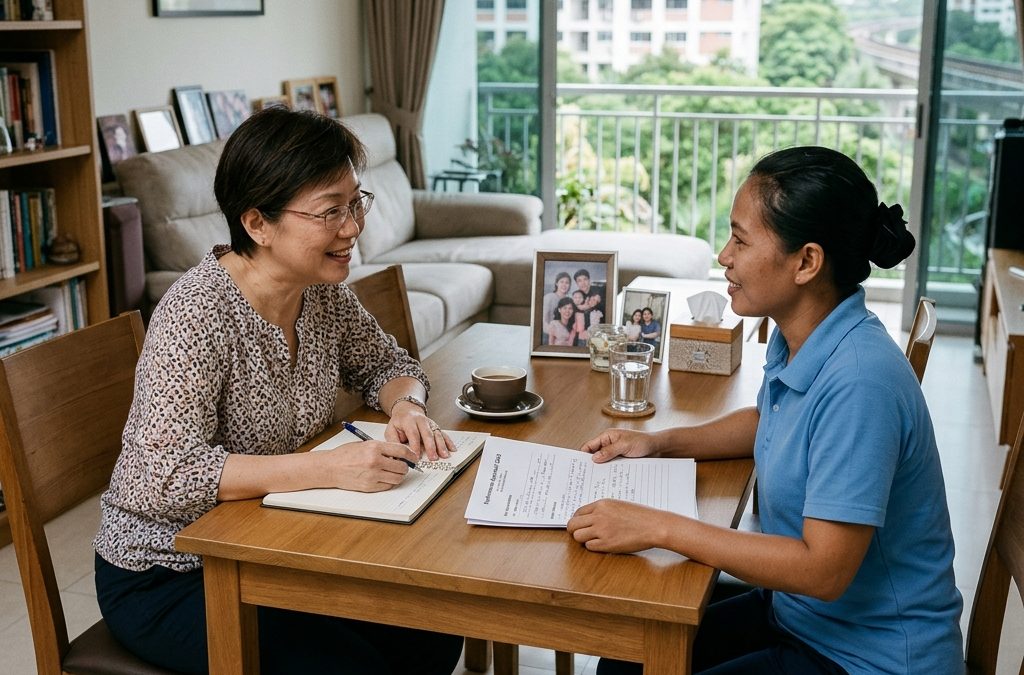
Managing a household in Singapore often requires the support of a Migrant Domestic Worker (MDW) to balance the demands of a career and family life. As your helper becomes an integral part of your home, the topic of a maid salary increment naturally arises. This is more than just a financial transaction; it is a vital tool for retention, motivation, and ensuring high-quality care for your loved ones. Understanding how to navigate performance appraisals and salary adjustments within the Ministry of Manpower (MOM) framework is essential for every employer who values stability and professional excellence in their domestic arrangements.
The Evolution of Domestic Work in the Singaporean Context
The role of a domestic helper has shifted significantly over the last decade. In the past, tasks were often limited to basic cleaning and cooking. Today, Singaporean families increasingly rely on helpers for specialized care, such as infant care, tutoring support, or assisting elderly family members with complex medical needs. This professionalization of the role means that a “one-size-fits-all” approach to salary is no longer practical or fair. Families must view their helper as a specialized employee whose compensation should reflect her growing skill set and the increasing cost of living in both Singapore and her home country.
By 2026, the Ministry of Manpower (MOM) will have implemented even more stringent guidelines regarding the well-being and management of MDWs. These regulations emphasize the importance of mental health, adequate rest, and transparent communication. A well-structured maid salary increment policy aligns perfectly with these national goals. It demonstrates that the employer is proactive, fair, and committed to a long-term working relationship. When a helper feels that her hard work is recognized through a formal appraisal and a subsequent pay raise, she is far more likely to renew her contract, saving the family the high costs and emotional stress of hiring and training a new helper every two years.
The Legal Framework and MOM 2026 Regulations
While the Ministry of Manpower does not mandate a specific annual increment amount, it provides a framework that governs the employment contract. As we move toward 2026, there is a heightened focus on the clarity of employment terms. Employers are required to maintain a written record of the monthly salary, including any adjustments made during the contract period. This documentation is vital in preventing disputes and ensuring that both parties are protected under the Employment Agencies Act and the Work Injury Compensation Act.
Employers must remember that the basic salary agreed upon in the initial contract is the legal minimum you must pay. However, the market rate for experienced helpers is steadily rising. A maid salary increment is often used as a tool to stay competitive in a market where skilled workers are in high demand. If a helper’s skills improve—for example, if she attends a caregiving course for the elderly or learns specialized culinary skills—her value in the Singaporean market increases. Keeping her salary stagnant while her market value rises can lead to resentment or the worker seeking a transfer to another employer who offers better terms.
The Performance Appraisal Framework for Households
A performance appraisal should not be a daunting event. Instead, view it as a scheduled conversation that happens once or twice a year to discuss what is going well and where improvements can be made. In a household setting, this appraisal is the foundation for any maid salary increment. Without a clear review of her performance, an increment can feel arbitrary. With a review, it becomes a reward for excellence and a motivation for future growth.
Start by setting clear expectations at the beginning of the employment. If the helper knows exactly what her responsibilities are, the appraisal becomes a simple matter of checking progress against those goals. For a Singaporean family, these goals often revolve around three main areas: household maintenance, specialized care (for children or the elderly), and attitude or integration into the family culture. Each of these areas should be discussed during the appraisal to provide a comprehensive view of her contribution to the home.
Quantifiable Metrics for Fair Evaluation
To make the appraisal objective, use specific examples of her performance. This prevents the conversation from becoming too emotional or vague. Consider the following metrics when evaluating if a maid salary increment is earned.
1. Reliability and Punctuality: Does she manage her daily schedule without constant reminders? Is the morning routine for the children handled efficiently so you can leave for work on time?
2. Quality of Specialized Care: For families with elderly parents, evaluate her patience and adherence to medication schedules. For those with infants, look at her hygiene standards and her ability to follow your specific parenting guidelines.
3. Initiative and Resourcefulness: Does she notice when household supplies are low and inform you in advance? Does she suggest better ways to organize the kitchen or manage the weekly laundry?
4. Financial Responsibility: If she handles a marketing budget, is her record-keeping accurate and honest? Managing the household finances with integrity is a significant indicator of trust and deserves recognition.
Calculating the Maid Salary Increment: Market Benchmarks
Once you have determined that an increment is deserved, the next question is how much. In Singapore, a standard maid salary increment typically ranges from $20 to $50 per month for each year of service. Some employers prefer to offer a larger jump, such as $100, at the point of contract renewal. Others choose to provide a performance bonus at the end of the year, which equals one month’s salary, similar to the 13th-month bonus received by most Singaporean workers.
It is also important to consider the cost of living. The families we assist at EELIT Agency often take into account the inflation rates in the helper’s home country. A small increase in Singapore dollars can have a substantial impact on her ability to support her family back home, pay for her children’s education, or save for her future. This empathy goes a long way in building loyalty. If you are unsure of the current market rates, consulting with a licensed agency like EELIT can provide you with real-time data on what other families are offering for similar roles.
The Art of the Review Meeting
The setting and tone of the appraisal meeting are just as important as the salary discussion itself. Choose a time when the house is quiet and you are not rushed. This should be a two-way conversation. Ask her how she feels about her work, what challenges she is facing, and if there are any tools or training she needs to do her job better. This demonstrates that you care about her professional development and her well-being.
When announcing the maid salary increment, be explicit about why she is receiving it. For example, say, “We are increasing your salary by $30 a month because we have seen how much effort you put into helping Ah Ma with her physiotherapy exercises.” This reinforces the positive behavior. If there are areas for improvement, address them gently but firmly. You might say, “We are giving you this raise because we value you, but we also need you to focus more on following the recipes we discussed for dinner.” This creates a balanced approach where the increment is tied to both past success and future expectations.
Practical Scenarios: Handling Different Increment Situations
Every household is different, and various scenarios might require different approaches to salary adjustments. Consider a situation where a helper has been with a family for five years. Her role has evolved from cleaning for a couple to managing two active toddlers. In this case, a standard increment might not be enough. The increased physical and mental load of childcare justifies a more significant salary adjustment to reflect her new “job description.”
Another scenario involves a helper who is performing adequately but not exceptionally. In this instance, you might choose to hold the base salary steady but offer a “completion bonus” if she finishes her contract successfully. This provides an incentive to improve without committing to a permanent monthly increase. It is important to communicate this clearly so she understands that the path to a permanent maid salary increment involves stepping up her performance in specific areas.
Addressing Poor Performance and Salary Expectations
Sometimes, a helper may ask for a raise that the family cannot afford or that her performance does not justify. In these cases, it is crucial to stay calm and professional. Explain the household budget constraints or point back to the specific performance metrics that have not been met. It is better to be honest about why a raise is not possible than to give a small, begrudging increment that leaves both parties unsatisfied.
If the performance is the issue, provide a clear roadmap for how she can earn a raise in six months. This gives her a goal to work toward and shows that the door is not permanently closed. In some cases, poor performance may be due to burnout or personal problems back home. Addressing these underlying issues through a heart-to-heart talk can often do more for productivity than a salary increase would. If the relationship has reached a point of irreconcilable differences regarding salary or performance, it may be time to seek mediation.
Non-Monetary Incentives and Long-term Retention
While the maid salary increment is a primary motivator, it is not the only way to show appreciation. In Singapore’s competitive domestic help market, non-monetary benefits can often be the deciding factor in whether a helper stays with a family. These include providing a private room, allowing for more flexible rest days, or paying for her to attend courses that interest her, such as computer literacy or first aid.
Another powerful incentive is the gift of time. Giving your helper an extra afternoon off after a particularly busy week of hosting guests shows that you recognize her extra effort. Small gestures, like celebrating her birthday or providing a reasonable budget for her own groceries and preferred toiletries, contribute to a positive working environment. These elements, combined with a fair salary, create a “holistic compensation” package that makes your household a highly desirable place to work.
The EELIT Agency Advantage: Professional Support for Your Family
At EELIT Agency Pte. Ltd., we understand that managing a domestic helper is a complex task that requires a balance of firmness and compassion. As a MOM-licensed agency, we are here to support Singaporean families through every stage of the employment journey. We don’t just match you with a helper; we help you manage the relationship for the long term.
When it comes to maid salary increments and performance appraisals, our specialists provide expert advisory services. We can help you draft a performance review template tailored to your specific household needs. If you find it difficult to discuss salary or performance directly with your helper, our experienced consultants can act as neutral mediators. We facilitate conversations that ensure both the employer’s expectations and the helper’s aspirations are met, leading to a more harmonious home environment.
We also keep our clients informed about the latest MOM regulations and market trends. If you are wondering whether your current salary offer is competitive for 2026, or if you need advice on how to structure a contract renewal with an increment, EELIT is your trusted partner. Our goal is to ensure that your family receives the best possible care while your domestic helper feels valued and motivated. By implementing these best practices in salary management and appraisals, you are not just being a good employer; you are securing the future of your household’s well-being.
Navigating the intricacies of domestic employment in Singapore requires a proactive approach. By treating the maid salary increment as a professional milestone and the performance appraisal as a constructive dialogue, you build a foundation of mutual respect. This respect is what transforms a standard employment arrangement into a lasting partnership, ensuring that your home remains a place of comfort and support for everyone who lives and works within it.
Connect with EELIT Placement Specialists
Speak directly with our senior placement consultants for personalized bio matching, MOM Work Permit processing, and household caregiving support across Singapore:
Corporate Headquarters Placement Consultation
Corporate HQ Priority WhatsApp: +65 9100 1610
Juliet (Senior Consultant): Chat with Juliet (+65 9168 2493) |
Joey (Senior Consultant): Chat with Joey (+65 8725 2891)
HQ Office Telephone (Hotline / Voice Call Only): +65 6320 3826
Islandwide Branch WhatsApp Lines
Orchard (Far East Shopping Centre): +65 9478 2786
Hougang: +65 8043 9823
Yishun: +65 8090 3168