
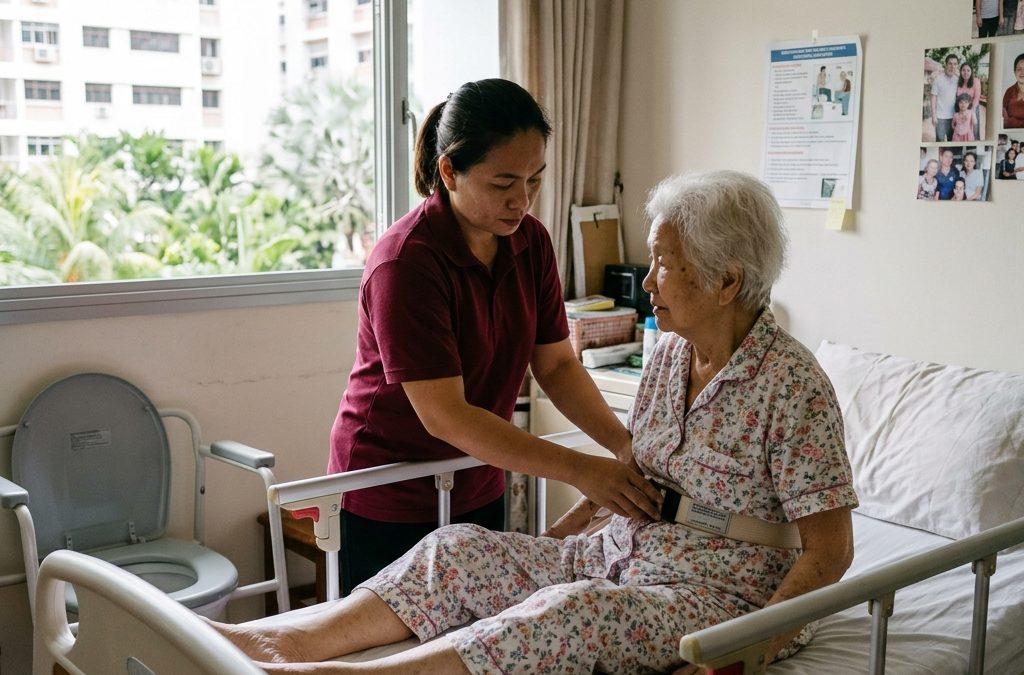
Caring for a bedridden family member in Singapore is an immense responsibility that requires more than just a willing heart; it demands a specific set of clinical and safety skills that go far beyond standard domestic chores. As our population ages toward the 2026 “super-aged” milestone, more households are turning to an eldercare maid to bridge the gap between hospital discharge and long-term home recovery. However, the transition from a clinical setting to a home environment is where the highest risks exist. Without proper training and a structured safety protocol, common issues like pressure sores, choking, or falls can lead to rapid health declination and emergency hospital readmissions. This guide provides a comprehensive roadmap for Singaporean families to ensure their domestic helper is fully equipped to manage the complexities of bedbound care safely and professionally.
Understanding the 2026 MOM Framework and the Shift in Eldercare
The Ministry of Manpower (MOM) and the Agency for Integrated Care (AIC) have increasingly emphasized the need for specialized training for Migrant Domestic Workers (MDWs) who are hired specifically for caregiving roles. By 2026, Singapore will see a significant shift in how home care is regulated, with a stronger push for certified training modules. For an employer, this means that hiring an eldercare maid is no longer about finding someone who can cook and clean. It is about finding a caregiver who understands the physiological needs of a sedentary senior. The Singapore government has already introduced the Caregivers Training Grant (CTG), which employers can use to offset the costs of training their helpers. Staying ahead of these regulations ensures that your household remains compliant while providing the highest standard of care for your loved ones.
EELIT Agency recognizes that the legal and ethical responsibility of care falls on both the employer and the employment agency. We focus on matching families with helpers who have either prior nursing experience or have undergone rigorous eldercare modules in their home countries. This proactive approach aligns with the national strategy of “Ageing-in-Place,” allowing seniors to remain in the comfort of their homes while receiving care that rivals institutional settings. When you hire through a specialized agency, you are not just filling a vacancy; you are securing a trained pair of hands that can save a life during a critical moment.
The Critical Skill of Pressure Sore Prevention and Skin Integrity
One of the most dangerous complications for a bedridden senior is the development of decubitus ulcers, commonly known as pressure sores. These wounds occur when constant pressure on specific areas of the body, such as the tailbone, heels, or shoulder blades, cuts off blood supply to the skin. For an eldercare maid, the ability to prevent, identify, and report these sores is a non-negotiable skill. A small patch of redness that does not disappear when pressed can escalate into a deep, infected wound within days if left unmanaged. This is why a strict repositioning schedule is the foundation of bedbound care.
1. The Two-Hour Turn Protocol: Your helper must master the art of the two-hour rotation. This involves moving the senior from lying on their back to their left side, and then to their right side, throughout the day and night. Using a physical logbook to track these turns is essential for accountability and health monitoring.
2. Proper Use of Offloading Pillows: Simply turning the patient is not enough. The helper needs to know where to place support pillows to “offload” pressure. For example, placing a pillow between the knees when the senior is on their side prevents the bony prominences of the knees from rubbing together. Another pillow should be placed under the calves to “float” the heels off the mattress.
3. Skin Inspection and Moisture Management: Every diaper change is an opportunity for a skin check. The helper should look for changes in skin color, temperature, or texture. Keeping the skin dry is equally important. Prolonged exposure to urine or sweat weakens the skin barrier, making it more susceptible to tearing. Using barrier creams and high-absorbency diapers is a key part of this daily safety routine.
Safe Transfer Techniques: Protecting the Senior and the Caregiver
Moving a bedridden senior, whether it is for a sponge bath or a transfer to a wheelchair, carries a high risk of injury for both the patient and the helper. Back injuries are the leading cause of eldercare maids being unable to complete their contracts. Therefore, mastering body mechanics is a primary safety skill. The helper must learn to “work with gravity” rather than against it. This involves keeping a wide base of support, bending at the knees rather than the waist, and keeping the senior close to their body during any lift.
1. Using Slide Sheets and Drawsheets: To move a senior up in bed, the helper should never pull on the senior’s arms or underarms, as this can cause shoulder dislocations or skin tears. Instead, a drawsheet or a low-friction slide sheet should be used. This allows the helper to glide the senior into the correct position with minimal physical strain.
2. The Log-Roll Technique: When changing bed linens or diapers, the log-roll technique is the safest method. The helper should fold the senior’s arms across their chest and bend the far knee, using the hip and shoulder as pivot points to roll the senior toward them. This keeps the senior’s spine aligned and prevents accidental falls from the bed.
3. Mechanical Aid Proficiency: If your home uses a hoist or a standing lifter, your eldercare maid must be 100% confident in operating it. EELIT Agency recommends that the helper practices these transfers under the supervision of a professional therapist before attempting them alone. Safety belts and slings must be checked daily for wear and tear to prevent catastrophic mechanical failures.
Managing Dysphagia and Preventing Choking Incidents
Many bedridden seniors suffer from dysphagia, or difficulty swallowing, which significantly increases the risk of choking and aspiration pneumonia. Aspiration occurs when food or liquid enters the lungs instead of the stomach, leading to severe infections that are often fatal for the elderly. Your domestic helper must be trained in texture-modified diets and safe feeding postures. This is perhaps the most life-critical skill in the daily routine of an eldercare maid.
1. The 90-Degree Rule: A senior should never be fed while lying flat. The helper must ensure the senior is propped up at a 90-degree angle, or as close to it as possible, using pillows or a hospital bed mechanism. This position should be maintained for at least 30 to 45 minutes after the meal to allow for proper digestion and to prevent acid reflux.
2. Identifying Aspiration Signs: The helper needs to be vigilant for “silent aspiration.” Signs include a wet or gurgly voice after eating, frequent throat clearing, or watery eyes during meals. If these signs occur, the feeding must stop immediately, and the employer should be notified so a speech therapist can be consulted.
3. Correct Food Consistency: If the senior has been prescribed a “soft,” “minced,” or “pureed” diet, the helper must follow these instructions strictly. Using a blender to achieve the right consistency and using thickening agents for liquids can prevent a choking emergency. The helper should also learn the Heimlich maneuver modified for seated or bedbound individuals as a last-resort emergency skill.
Medication Safety and Record Keeping
A bedridden senior often has a complex cocktail of medications, ranging from blood thinners to blood pressure stabilizers. A single mistake in dosage or timing can have serious consequences. For a family, the peace of mind comes from knowing their eldercare maid follows a foolproof medication management system. We advise all our employers to implement a “Five Rights” protocol: the Right Patient, the Right Medication, the Right Dose, the Right Route, and the Right Time.
1. Use of Pill Organizers: To minimize errors, medications should be pre-packed in weekly pill organizers by the employer or a nurse. The helper’s role is to administer these at the correct times and document the administration in a daily log. If a senior refuses medication or vomits after taking it, the helper must know to report this immediately rather than attempting a second dose.
2. Understanding Side Effects: While we do not expect helpers to be pharmacists, they should be aware of common side effects. For instance, if a senior is on blood thinners, the helper should look out for unusual bruising or bleeding from the gums during oral care. If the senior is on diuretics, the helper must monitor for signs of dehydration or low blood pressure, such as dizziness.
3. Storage and Disposal: Medications must be stored in a cool, dry place, away from direct sunlight and out of reach of children or confused seniors. The helper should also be taught how to check expiry dates and how to dispose of unused medications safely according to Singapore’s healthcare guidelines.
Infection Control and Hygiene Protocols
For a bedridden person, the bed is their entire world. Maintaining a sterile and hygienic environment is vital to prevent infections, particularly Urinary Tract Infections (UTIs) and respiratory issues. An eldercare maid must master the nuances of a “bed bath” and perineal care. Standard cleaning habits are insufficient here; clinical hygiene is the standard required.
1. Perineal Care: When cleaning after a diaper change, the helper must always wipe from front to back to prevent bacterial contamination of the urinary tract. This is especially crucial for female seniors. Using pH-balanced wipes and ensuring the area is completely dry before putting on a new diaper is essential for preventing both infection and skin breakdown.
2. Oral Hygiene: Even if a senior is not eating by mouth, oral care is necessary. Bacteria in the mouth can be aspirated into the lungs, causing pneumonia. The helper should use soft swabs or a gentle toothbrush to clean the gums, tongue, and teeth at least twice a day.
3. Environment Sanitation: The senior’s room should be well-ventilated and cleaned daily. High-touch surfaces like bed rails, remote controls, and over-bed tables should be disinfected regularly. The helper must also practice strict hand hygiene, washing their hands thoroughly before and after every caregiving task to prevent the cross-contamination of germs.
Emergency Response and Scenario Planning
No matter how well-trained a helper is, emergencies can happen. The difference between a controlled situation and a tragedy is a pre-defined emergency plan. An eldercare maid must be empowered to act decisively. This starts with having a clear list of emergency contacts, including the family’s preferred GP, the nearest hospital, and the SCDF emergency line (995), posted visibly in the senior’s room.
1. Recognizing “Red Flags”: The helper should be trained to recognize signs that require immediate medical attention. these include sudden confusion, facial drooping, difficulty breathing, or a high fever. We teach our helpers that it is better to raise a false alarm than to ignore a potential stroke or cardiac event.
2. Basic First Aid and CPR: While not all helpers come with a CPR certificate, we highly encourage employers to enroll their eldercare maid in a basic first aid course. Knowing how to handle a fall or what to do if a senior stops breathing provides a vital safety net for the household.
3. Communication during Crisis: In an emergency, the helper needs to stay calm and provide clear information to the paramedics. This includes having a “Grab Bag” ready with the senior’s NRIC, a list of current medications, and their recent medical history. This preparation ensures that the medical team can provide the right treatment as soon as they arrive.
How EELIT Agency Supports Your Caregiving Journey
At EELIT Agency Pte. Ltd., we understand that the safety of your bedridden loved one depends on the competence of the person standing by their bed 24/7. We do not simply provide a helper; we provide a caregiving partner. Our selection process involves a deep dive into the candidate’s history, focusing on their experience with elderly care, their physical stamina, and their emotional resilience. We recognize that caregiving is a marathon, and the “human” element is just as important as the clinical skills.
Our support doesn’t end on the day of deployment. We offer post-placement consultations to help the helper acclimate to your specific home setup. Whether it is adjusting to a specific brand of medical equipment or understanding the dietary preferences of a senior with dementia, we are here to facilitate the transition. By choosing EELIT, you are gaining access to a network of expertise that helps you navigate the MOM regulations and ensures your helper stays motivated and skilled throughout her contract. We believe that a well-supported helper leads to a well-cared-for senior.
The Sustainable Path to Home Care
Providing home care for a bedridden senior is one of the most challenging tasks a family can face. It requires a delicate balance of physical skill, medical knowledge, and emotional patience. By ensuring your eldercare maid masters these crucial safety skills, you are doing more than just preventing accidents; you are preserving the dignity and quality of life for your elderly family member. In the context of Singapore’s evolving healthcare landscape, being prepared is the best way to honor our seniors.
Remember that caregiving is a team effort. The helper provides the daily hands-on care, the family provides the emotional support and oversight, and the agency provides the professional foundation. When these three pillars work together, “Ageing-in-Place” becomes more than just a policy goal—it becomes a safe, comfortable reality for your loved one. If you are ready to find a trained eldercare maid who can meet these high standards, EELIT Agency is here to guide you through every step of the process, ensuring your home remains a sanctuary of safety and care.
Connect with EELIT Placement Specialists
Speak directly with our senior placement consultants for personalized bio matching, MOM Work Permit processing, and household caregiving support across Singapore:
Corporate Headquarters Placement Consultation
Corporate HQ Priority WhatsApp: +65 9100 1610
Juliet (Senior Consultant): Chat with Juliet (+65 9168 2493) |
Joey (Senior Consultant): Chat with Joey (+65 8725 2891)
HQ Office Telephone (Hotline / Voice Call Only): +65 6320 3826
Islandwide Branch WhatsApp Lines
Orchard (Far East Shopping Centre): +65 9478 2786
Hougang: +65 8043 9823
Yishun: +65 8090 3168