
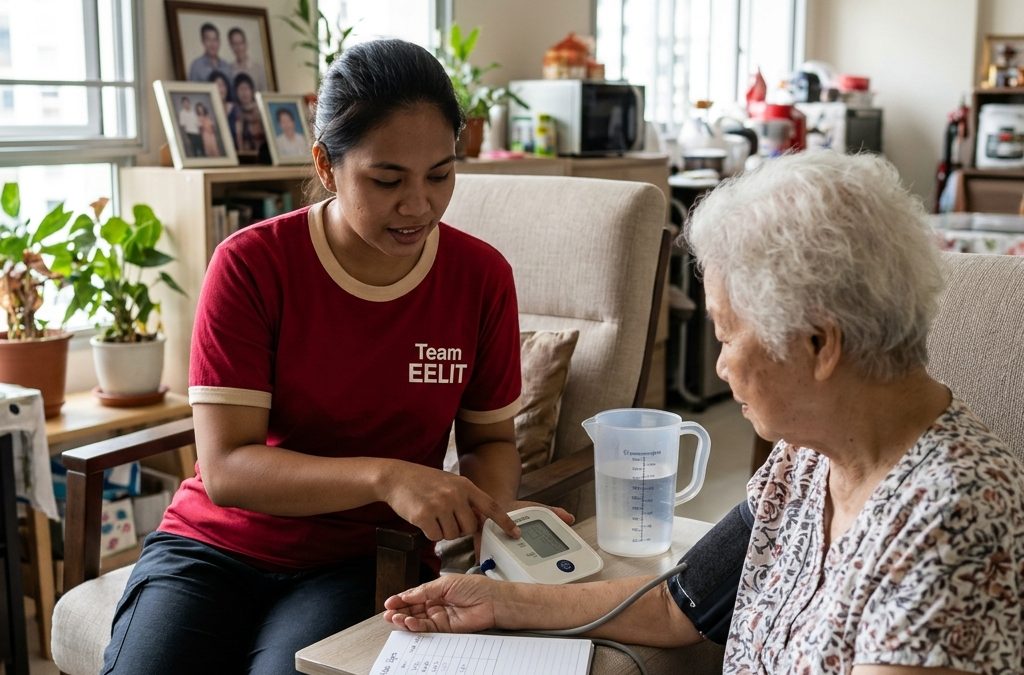
Managing a household in Singapore while caring for an elderly parent with Congestive Heart Failure (CHF) presents a unique set of challenges that requires more than just standard domestic help. As our population ages and multi-generational living remains the cornerstone of our social fabric, the role of the Migrant Domestic Worker (MDW) has evolved from general housekeeping to specialized caregiving. Heart Failure Care is not about a single medical procedure but rather a meticulous, daily commitment to monitoring fluid intake and tracking vital signs. At EELIT Agency, we recognize that for a Singaporean family, the peace of mind that comes with knowing a helper is competent in these specific tasks is invaluable. This guide provides an exhaustive roadmap for employers to train and supervise their helpers in the critical nuances of CHF management, ensuring safety, longevity, and a higher quality of life for our seniors.
The 2026 Legal Landscape: MOM Regulations and Caregiver Competency
The Ministry of Manpower (MOM) has consistently updated its framework to reflect the increasing medical complexity of care provided within Singaporean homes. By 2026, the emphasis on specialized training for MDWs handling high-needs patients has become a central pillar of the employment process. Employers are now encouraged, and in some cases required, to ensure their helpers undergo accredited caregiver training if they are looking after seniors with chronic conditions like Congestive Heart Failure. This shift ensures that the helper is not merely a domestic assistant but a trained extension of the healthcare team. At EELIT Agency, we align our placement process with these evolving standards, ensuring that the helper’s skills match the specific medical requirements of the elderly person they will care for.
Furthermore, the 2026 guidelines emphasize the importance of clear communication and documentation. Employers must provide a safe environment where the MDW can perform medical tasks without undue pressure. This includes ensuring the helper has adequate rest, as fatigue can lead to critical errors in medication or vital sign recording. Understanding these legal and ethical frameworks is the first step for any employer. You are not just hiring a helper; you are managing a specialized home-care environment that must adhere to Singapore’s high standards of safety and eldercare excellence.
Understanding Heart Failure Care in the Singaporean Home
Heart failure does not mean the heart has stopped working, but rather that it is not pumping efficiently enough to meet the body’s needs. In many Singaporean seniors, this condition leads to fluid retention, as the kidneys receive less blood and the body holds onto salt and water. This excess fluid often settles in the lungs, making it hard to breathe, or in the legs and abdomen, causing visible swelling. For a helper, the priority is to prevent this fluid buildup before it becomes an emergency. This requires a level of vigilance that goes beyond standard care. It involves recognizing that every cup of water, every bowl of soup, and every change in weight has a direct impact on the senior’s health.
In our local context, diet plays a massive role. Singaporean cuisine can be high in sodium, which exacerbates fluid retention. Whether it is the soy sauce in chicken rice or the salt in a bowl of laksa, the helper must be trained to manage both fluid and sodium intake simultaneously. Heart Failure Care is a balancing act. If the heart is a pump and the blood vessels are pipes, excess fluid creates high pressure that the weak pump cannot handle. The goal of the helper’s daily routine is to keep that pressure at a manageable level through strict adherence to medical protocols.
The Critical Protocol of Fluid Restriction
Fluid restriction is often the most difficult part of Heart Failure Care for both the senior and the helper. In Singapore’s humid climate, thirst is a constant, and many seniors are accustomed to having tea or soup with every meal. However, for a CHF patient, the doctor may limit total daily fluid intake to 1.2 or 1.5 liters. This includes all liquids: water, coffee, tea, soup, milk, and even the liquid used to take medication. It also includes “hidden” fluids found in foods like porridge, jelly, and watery fruits like watermelon or papaya. A helper must be taught that “one cup” is not a vague measurement but a specific volume in milliliters.
1. The Measurement System: The most effective way for a helper to track fluid is using a dedicated graduated container. Every time the senior drinks something, the helper must subtract that amount from the daily total. For example, if the limit is 1,200ml and the senior drinks 200ml of coffee in the morning, the helper knows only 1,000ml remains for the rest of the day. This must be recorded in a physical logbook kept in the kitchen. Digital apps are useful, but a physical book is often more reliable for quick reference during doctor visits.
2. Managing Thirst: To help the senior cope with thirst without exceeding the limit, the helper can use several practical techniques. Sucking on small ice chips is often more satisfying than a quick glass of water. One ice cube is roughly 15ml to 30ml of water. Another technique is using a spray bottle to mist the mouth or offering cold grapes, which provide moisture without a large volume of liquid. The helper should also ensure the senior rinses their mouth with cold water but spits it out, rather than swallowing it.
3. Social Pressure and Soups: In many Chinese or Malay households, soup is a staple of the evening meal. The helper must be empowered to say no or to provide only a very small portion (e.g., half a bowl) and count it toward the daily total. It is essential for the family to support the helper in this. If family members offer the senior extra drinks, it undermines the helper’s authority and puts the senior’s life at risk.
Vital Signs Tracking: The Helper’s Daily Routine
Tracking vital signs is the early warning system of Heart Failure Care. If a helper can spot a trend before it becomes a crisis, they can save the senior from a hospital admission. The three most important metrics are weight, blood pressure, and oxygen saturation. These must be taken at the same time every day, ideally in the morning after the senior has used the bathroom but before they have had breakfast or their first drink.
1. Daily Weight Checks: This is the most crucial task. A sudden increase in weight is almost always fluid, not fat. If the senior gains 1kg to 1.5kg in a single day, or 2kg to 3kg in a week, it is a red flag. The helper must use a digital scale on a flat, hard surface (not carpet). The senior should wear similar lightweight clothing each time. The helper must write the weight down immediately. Any significant jump must be reported to the employer or the doctor immediately, as it often means the heart is struggling to keep up with fluid buildup.
2. Blood Pressure and Heart Rate: Using a digital arm cuff monitor is standard. The helper must ensure the senior is sitting quietly for five minutes before taking the reading. Their feet should be flat on the floor and their arm supported at heart level. The helper should record both the systolic (top) and diastolic (bottom) numbers, as well as the pulse. A very high or very low heart rate can indicate that the heart is stressed or that medication doses need adjustment.
3. Oxygen Saturation (SpO2): A pulse oximeter is a small device placed on the finger. For CHF patients, oxygen levels can drop if fluid starts to enter the lungs. A reading below 94% (or whatever specific baseline the doctor provides) is a cause for concern. The helper should be trained to notice if the senior’s fingernails are cold or if they are wearing nail polish, which can interfere with the reading.
Identifying Red Flags: When to Call for Help
Training a helper to recognize “red flags” is a core part of EELIT Agency’s focus. It is not enough to just record numbers; the helper must understand what those numbers mean. We teach helpers to look for physical signs of distress that accompany the data they collect. This proactive approach is what distinguishes a general caregiver from a heart failure specialist.
1. Shortness of Breath (Dyspnea): The helper should monitor if the senior is more breathless than usual during simple tasks like walking to the bathroom. A critical sign is “orthopnea,” where the senior cannot breathe while lying flat and needs two or more pillows to prop themselves up at night. If the senior suddenly wakes up at night gasping for air, this is an emergency.
2. Swelling (Edema): The helper should check the senior’s ankles, feet, and legs every morning. If the skin looks shiny or tight, or if pressing a finger into the skin leaves a lasting indentation (pitting edema), fluid is accumulating. Sometimes this swelling can also occur in the abdomen, making the senior feel bloated or lose their appetite.
3. Fatigue and Confusion: If the senior is unusually tired, dizzy, or seems confused, it may be a sign that the brain is not receiving enough oxygenated blood. The helper must note these behavioral changes in their daily log. A sudden cough, especially one that produces frothy or pink-tinged sputum, is a sign of acute pulmonary edema and requires an immediate call to 995.
Effective Communication and Logbook Management
The logbook is the bridge between the home and the clinic. When you take your parent to a specialist at the National Heart Centre or a local polyclinic, the doctor will make much better decisions if they have a month’s worth of accurate daily data. The helper should be instructed to bring this logbook to every appointment. We recommend a simple notebook with columns for: Date/Time, Weight, Blood Pressure/Pulse, Total Fluid In, and a “Remarks” section for symptoms like “short of breath” or “swelling seen.”
To ensure the helper stays consistent, the employer should review the logbook at least twice a week. This shows the helper that the task is important and provides an opportunity to offer praise or correction. Communication must be clear and free of jargon. Instead of saying “monitor for edema,” say “check if the socks are leaving a deep mark on the skin.” Instead of “restrict fluids,” say “only six small cups of water today.” Using visual aids, like a marked water bottle or pictures of what swelling looks like, can bridge any language gaps.
The Psychological Dimension of Caregiving
Caring for someone with Heart Failure Care requirements is mentally taxing for an MDW. They are often under the pressure of keeping someone alive while dealing with a senior who may be irritable due to their own physical discomfort and dietary restrictions. It is common for seniors to get angry when their water is taken away or when they are told they cannot have their favorite salty snack. The employer must step in to manage these interpersonal dynamics.
Employers should encourage the helper to be patient but firm. Explain to the helper that the senior’s irritability is a symptom of the disease, not a personal attack. Providing the helper with short breaks after stressful periods and ensuring they have someone to talk to can prevent burnout. At EELIT Agency, we often advise families on how to create a supportive environment where the helper feels like a valued partner in the care team rather than just an employee. A happy, well-rested helper is a more observant and accurate caregiver.
How EELIT Agency Supports Your Caregiving Journey
At EELIT Agency, we understand that finding the right helper for Heart Failure Care is a high-stakes decision. We do not just provide a list of candidates; we curate our selection based on the specific medical needs of your household. Our role begins with a thorough assessment of your requirements. Does the senior have multiple comorbidities? Do they need help with mobility as well as fluid tracking? We look for MDWs who have a proven track record in eldercare or those who demonstrate the temperament and aptitude for detailed medical monitoring.
1. Specialized Matching: We prioritize candidates who have prior experience in Singapore or abroad caring for heart failure patients. We look for helpers who are comfortable using medical devices like blood pressure monitors and who understand the importance of strict schedules. Our screening process includes practical questions to test their understanding of fluid management and emergency response.
2. Training and Integration: Once a helper is selected, we provide resources and guidance to help the family onboard them effectively. We emphasize the importance of the first two weeks, where the employer and helper should perform the measurements together. This “shadowing” period ensures that the helper’s technique is correct and that they understand the specific red flags for that particular senior.
3. Ongoing Consultation: Our relationship with the family doesn’t end on the day the helper arrives. We remain available to provide advice if challenges arise. Whether it is a communication breakdown regarding the senior’s diet or a need for a refresher on how to use a new medical device, EELIT Agency is your partner in ensuring the care remains at a high standard. We believe that a successful placement is one where the senior is safe, the helper is competent, and the family is relieved of the constant worry of medical mismanagement.
Actionable Scenario: A Jump in Weight
Imagine a scenario where your helper, Siti, wakes up on a Tuesday morning and weighs your father. Yesterday, he was 65.2kg. Today, he is 66.7kg. This is a 1.5kg gain in 24 hours. Because of her training, Siti knows this is not fat gain. She immediately checks your father’s breathing and notices he is slightly more winded than usual. She looks at his ankles and sees that the skin is tighter than the day before.
In this situation, Siti should not wait for you to come home from work. Following the protocol you established, she should call you immediately or message the family group chat with the specific numbers. You can then call the clinic or the heart failure nurse. Because Siti caught this early, the doctor might simply instruct you to give an extra “water pill” (diuretic) for a day or two. This small intervention, made possible by diligent vital signs tracking, prevents the fluid from reaching the lungs and avoids a stressful, expensive trip to the Emergency Department.
Final Thoughts for Singaporean Employers
Heart Failure Care is a marathon, not a sprint. It requires a level of discipline that can be difficult to maintain month after month. However, the rewards are significant. When fluid restriction and vital signs tracking are performed correctly, seniors with CHF can live very full lives, enjoying their grandchildren and their community for many years. The MDW is the linchpin of this success. By investing time in their training, providing the right tools, and working with an agency like EELIT that understands these complexities, you are creating a safety net for your loved one.
We encourage all new employers to approach this task with a mindset of partnership. Your helper is your eyes and ears when you are at the office. Treat the daily logbook as a professional document and the morning vital signs as a non-negotiable ritual. With the right support system, including a competent helper and a dedicated employment agency, managing heart failure at home becomes a manageable part of daily life rather than a source of constant anxiety. EELIT Agency is here to ensure you find that perfect match, providing the expertise and the heart needed for high-quality eldercare in Singapore.
Connect with EELIT Placement Specialists
Speak directly with our senior placement consultants for personalized bio matching, MOM Work Permit processing, and household caregiving support across Singapore:
Corporate Headquarters Placement Consultation
Corporate HQ Priority WhatsApp: +65 9100 1610
Juliet (Senior Consultant): Chat with Juliet (+65 9168 2493) |
Joey (Senior Consultant): Chat with Joey (+65 8725 2891)
HQ Office Telephone (Hotline / Voice Call Only): +65 6320 3826
Islandwide Branch WhatsApp Lines
Orchard (Far East Shopping Centre): +65 9478 2786
Hougang: +65 8043 9823
Yishun: +65 8090 3168