
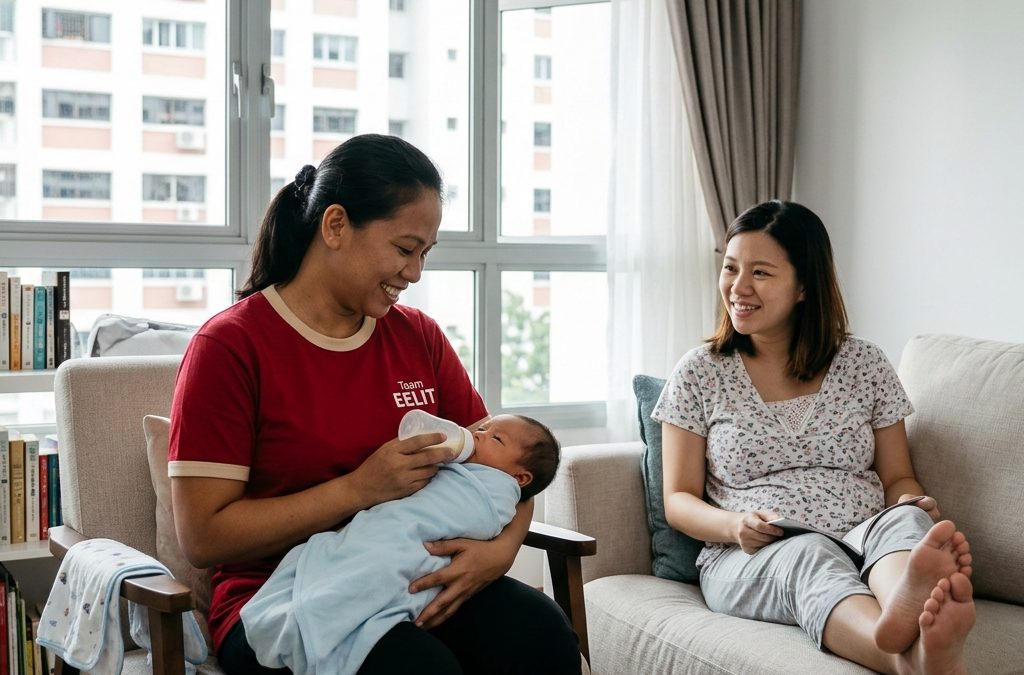
In the fast-paced environment of Singapore, the arrival of a newborn marks a significant shift for any household, especially for working professionals and multi-generational families. The traditional practice of post-natal confinement remains a cornerstone of Asian culture, emphasizing a period of rest and recovery for the mother while ensuring the infant receives specialized care. While many families historically relied on freelance confinement nannies, there is a growing trend toward employing trained migrant domestic helpers to bridge the gap between temporary post-birth support and long-term domestic stability. At EELIT Agency Pte. Ltd., we recognize that a helper’s role during the “Golden Month” and beyond is a specialized discipline that requires a unique blend of technical skill, cultural awareness, and emotional intelligence.
The Evolution of Confinement Care in the Singapore Context
For decades, the standard approach to post-natal care in Singapore involved hiring a confinement nanny for a strict twenty-eight-day period. However, as the cost of these specialized services rises and the need for long-term domestic support becomes more pressing, families are looking for more sustainable solutions. A trained domestic helper who understands the nuances of post-natal care offers a more integrated approach. Unlike a short-term nanny who departs after four weeks, a domestic helper stays with the family, providing continuity that is essential for the child’s development and the mother’s return to the workforce.
The cultural significance of confinement centers on the belief that a mother’s body is vulnerable to “wind” and “cold” after delivery. This period is dedicated to replenishing lost energy, or “Qi,” through specific dietary choices and physical restrictions. In a modern Singaporean home, where both parents often work, the helper becomes the executor of these traditional practices. She ensures that the home environment remains conducive to healing while managing the logistical complexities of a new baby.
Understanding the MOM Legal Framework and 2026 Regulations
Hiring a domestic helper for post-natal support requires strict adherence to the Ministry of Manpower (MOM) guidelines. By 2026, Singapore will have implemented even more stringent protections and welfare standards for migrant domestic workers. These regulations are designed to ensure that the worker is physically and mentally fit to handle the demands of newborn care. Employers must be aware that while a helper provides essential support, she is entitled to mandatory rest days and defined work-life boundaries.
The 2026 framework emphasizes the importance of mental health screenings and regular check-ins for helpers. For a family with a newborn, this is particularly relevant. The sleep deprivation associated with infant care can affect a helper just as it affects a parent. EELIT Agency advises all employers to establish a clear rest schedule early on. If a helper is required to wake up for night feeds, there must be a compensatory rest period during the day. This is not just a matter of legal compliance but a necessity for the safety of the infant. A fatigued caregiver is more prone to errors, and in the context of newborn safety, there is no room for compromise.
Furthermore, the 2026 regulations clarify the insurance requirements and medical coverage that employers must provide. When a helper is tasked with specialized care, such as managing a mother’s post-surgical recovery after a C-section, the employer must ensure the helper has received adequate training and that the scope of work remains within the legal definitions provided by the MOM. EELIT Agency assists employers in navigating these administrative requirements, ensuring that the employment contract reflects the specific needs of a post-natal household while protecting the rights of the worker.
Daily Protocols for Post-Natal Nutrition and Meal Preparation
One of the primary responsibilities of a helper during the confinement period is the preparation of specific meals designed to aid recovery and promote lactation. This is often where the most significant cultural knowledge is required. The helper must be proficient in using ingredients such as old ginger, sesame oil, black vinegar, and red dates. These ingredients are believed to expel wind and warm the body.
-
1. Preparation of Red Date Tea: This is a staple replacement for plain water during the first month. The helper must know how to properly de-seed the dates to prevent “heatiness” and simmer them with longans and wolfberries to create a nourishing tonic that the mother can drink throughout the day.
2. Managing the Confinement Kitchen: Hygiene is paramount. The helper must maintain a separate workflow for the mother’s meals, ensuring that all ingredients are fresh and that the kitchen is sanitized. This includes the slow-cooking of soups like green papaya soup with fish, which is essential for boosting breast milk supply.
3. Ingredient Sourcing: A trained helper takes the initiative to manage the pantry. She tracks the usage of expensive herbs like Cordyceps or bird’s nest and ensures that the family’s grocery list reflects the mother’s changing nutritional needs as she moves from the first week of “detoxification” to the subsequent weeks of “tonification.”
Beyond the ingredients, the timing of these meals is essential. A mother recovering from childbirth needs consistent nutrition to manage her energy levels. The helper’s ability to coordinate meal times with the baby’s nap schedule ensures that the mother can eat her meals while they are still warm, a simple but vital aspect of the confinement tradition.
Infant Care Protocols and Hygiene Standards
While the mother recovers, the helper often takes the lead on the physical tasks of infant care. This requires a high level of technical proficiency and an unwavering commitment to hygiene. In a Singaporean household, where the risk of tropical illnesses is a consideration, maintaining a sterile environment for the newborn is a top priority.
The helper’s daily routine includes the meticulous cleaning and sterilization of feeding equipment. Whether the mother is breastfeeding or using formula, every bottle, teat, and pump part must be washed with specialized detergent and processed through a steam or UV sterilizer. The helper must also be trained in the correct storage of expressed breast milk, adhering to strict temperature guidelines to prevent spoilage and bacterial growth.
Newborn hygiene extends to umbilical cord care and bathing. The helper must demonstrate a gentle yet firm hand during bath time, ensuring the water temperature is precisely calibrated and the infant is supported safely. She must be observant, looking for signs of diaper rash, jaundice, or infection around the umbilical stump, and reporting these to the parents immediately. This proactive observation is what separates a general houseworker from a trained post-natal assistant.
Navigating Multi-Generational Dynamics and Cultural Sensitivity
In many Singaporean homes, the post-natal period involves the presence of grandparents. This can sometimes lead to conflicting advice regarding childcare and confinement practices. The helper often finds herself in the middle of these dynamics. A grandmother may insist on traditional methods, such as wrapping the baby in extra layers of clothing, while the parents may prefer modern pediatric advice regarding the prevention of overheating.
A helper trained by EELIT Agency is taught to navigate these situations with respect and professionalism. Her role is to support the parents’ decisions while maintaining a harmonious relationship with the elders in the house. She acts as a stabilizer, ensuring that the household routine continues smoothly despite the stresses that a new baby can bring to family relationships. Clear communication is the tool she uses to manage these expectations, ensuring that everyone’s primary goal—the health of the mother and child—remains the focus.
The Helper as a Pillar of Emotional Support
The transition to motherhood is as much an emotional journey as it is a physical one. Post-natal depression and “baby blues” are real concerns that many new mothers face. While a domestic helper is not a medical professional, her presence can significantly alleviate the triggers of post-natal distress. By taking over the heavy lifting of housework, laundry, and meal preparation, she allows the mother to focus entirely on bonding with her baby and resting.
The helper provides a quiet, consistent form of support. She is the one who notices if the mother is not eating or if she seems unusually withdrawn. In many cases, the helper becomes a confidante, providing a listening ear during late-night feedings or during the long hours of the day when the father is at work. This emotional labor is an undervalued part of the helper’s role, yet it is essential for a holistic recovery. At EELIT, we emphasize the importance of empathy in our training modules, preparing helpers to be sensitive to the mother’s changing moods and physical needs.
Structured Daily Schedule for Post-Natal Support
A successful confinement period is built on a structured routine. Without a plan, the household can quickly descend into chaos, leading to stress for both the parents and the helper. A typical day for a helper providing post-natal support might look like this:
-
1. Early Morning: Prepare the first serving of red date tea and the mother’s breakfast. Sterilize all bottles from the night before and prepare the baby for their first morning change and feed.
2. Mid-Morning: Assist the mother with her sponge bath or herbal bath. Perform light housekeeping, focusing on the nursery and the mother’s room. Ensure the mother has snacks and hydration ready.
3. Lunchtime: Prepare a nutrient-dense confinement lunch. While the mother rests or feeds the baby, the helper manages the laundry, specifically separating the baby’s clothes and using hypoallergenic detergents.
4. Afternoon: Monitor the baby’s nap cycles. This is often the time when the helper can catch up on more intensive cleaning or prepare the ingredients for the evening’s dinner and soup.
5. Evening: Prepare the final meal of the day. Ensure the nursery is set up for the night, with all necessary supplies (diapers, wipes, swaddles) within easy reach for the parents.
6. Night Cycle: Depending on the agreed-upon arrangement, the helper may assist with one night feed or focus on ensuring the mother has everything she needs to nurse comfortably during the night.
By following a consistent schedule, the helper creates a sense of predictability. This allows the mother to plan her rest and gives the helper clear windows of time to manage her own welfare and breaks, adhering to the 2026 MOM guidelines for worker well-being.
How EELIT Agency PTE. LTD. Facilitates This Transition
Selecting the right helper for a post-natal role is a high-stakes decision. Not every domestic helper is suited for the intensity of newborn care. At EELIT Agency, our screening process is rigorous. We look for candidates who have prior experience in infant care or who demonstrate a high capacity for learning these specialized skills. We prioritize candidates with a proven track record of stability and a genuine affinity for children.
Our support does not end with the placement. We provide comprehensive orientation for both the employer and the helper. For the employer, we offer guidance on how to set realistic expectations and how to create a work environment that fosters long-term success. For the helper, we provide access to training resources that cover the essentials of Singaporean confinement practices and modern infant safety standards. This dual approach ensures that when the helper enters the home, she is prepared for the specific cultural and technical demands of the household.
We also recognize that the first few weeks are a period of adjustment. EELIT Agency remains available to provide mediation and advice if challenges arise. Whether it is a misunderstanding regarding meal preparation or the need to adjust the daily schedule, our consultants offer practical solutions based on years of experience in the Singapore employment sector. We believe that a successful placement is one where the helper becomes an integral part of the family’s support system, allowing the parents to enjoy the early stages of their child’s life with peace of mind.
The Long-Term Value of Trained Post-Natal Support
Investing in a trained domestic helper for post-natal care is an investment in the family’s future. The skills the helper acquires during the confinement month—understanding the baby’s cues, maintaining high hygiene standards, and managing a complex household schedule—form the foundation for her role as the child grows. Unlike a temporary nanny, the helper develops a deep bond with the infant and a thorough understanding of the family’s preferences and values.
For the working mother in Singapore, this continuity is invaluable. Knowing that her child is in the care of someone who has been there since the beginning allows for a much smoother return to professional life. The helper’s role evolves from post-natal support to toddler care, providing a stable environment for the child’s early years. This long-term perspective is what EELIT Agency champions, helping families build a sustainable and supportive home environment from the very first day of their child’s life.
The post-natal period is a time of immense change and vulnerability. By choosing a domestic helper who is properly trained and supported by a reputable agency, Singaporean families can ensure that this “Golden Month” is a period of genuine healing and joy. With the right support, the challenges of newborn care become manageable, and the foundation of the family is strengthened for the years to home.
Connect with EELIT Placement Specialists
Speak directly with our senior placement consultants for personalized bio matching, MOM Work Permit processing, and household caregiving support across Singapore:
Corporate Headquarters Placement Consultation
Corporate HQ Priority WhatsApp: +65 9100 1610
Juliet (Senior Consultant): Chat with Juliet (+65 9168 2493) |
Joey (Senior Consultant): Chat with Joey (+65 8725 2891)
HQ Office Telephone (Hotline / Voice Call Only): +65 6320 3826
Islandwide Branch WhatsApp Lines
Orchard (Far East Shopping Centre): +65 9478 2786
Hougang: +65 8043 9823
Yishun: +65 8090 3168