
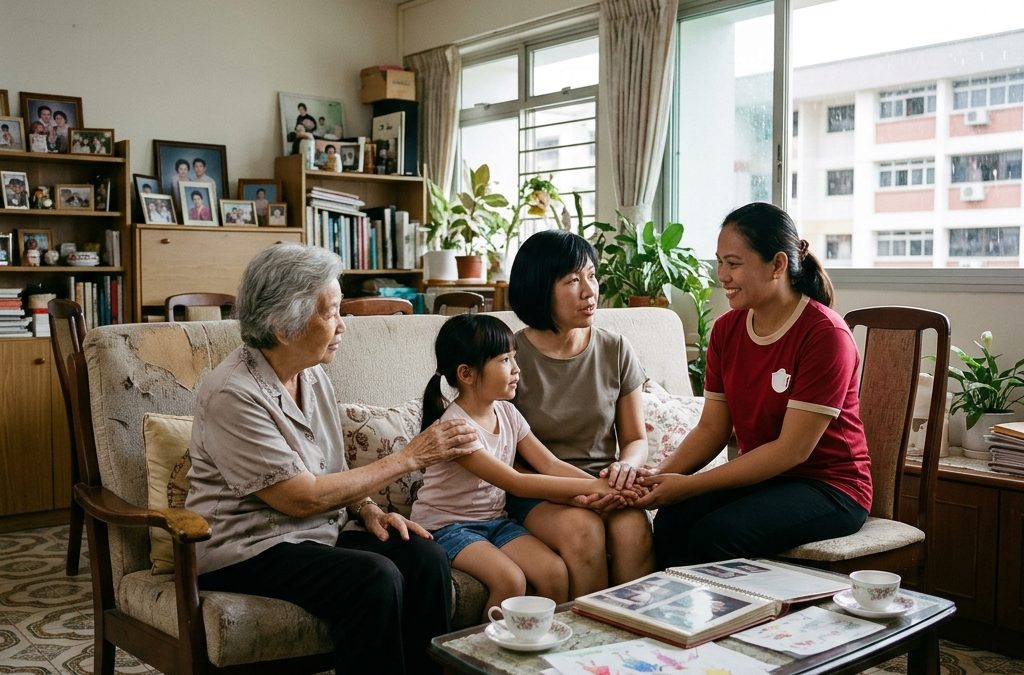
Living in a three generation household in Singapore is a deeply rooted cultural norm that offers many benefits, such as shared family bonds and immediate support systems. However, when you introduce a Migrant Domestic Worker (MDW) into a 4-room or 5-room HDB flat already occupied by grandparents, working parents, and energetic children, the domestic dynamic changes instantly. Managing a helper in such a high-pressure environment requires more than just a standard employment contract; it requires a strategic approach to fairness, clear communication, and a deep understanding of Singapore’s evolving labor regulations.
The Reality of the Three Generation Household in Singapore
In the current Singaporean context, the “sandwich generation” refers to adults who are simultaneously caring for their aging parents and their own young children. Bringing a helper into this mix is often a necessity rather than a luxury. For many families, the helper is the glue that prevents the household from falling into chaos. Yet, the most common reason for helper turnover in multi-generational homes is not the workload itself, but the confusion over who is in charge and how the work is distributed.
When three generations live under one roof, the helper often faces multiple “bosses.” The grandmother might want the floor mopped with a specific herbal solution, while the working mother wants it done with a disinfectant safe for the toddler. The grandfather might want his lunch served at 11:30 AM, while the children need to be picked up from student care at the same time. Without a clear hierarchy and a fair split of duties, the helper quickly becomes overwhelmed, leading to friction and eventual resignation.
Legal Framework and the 2026 MOM Landscape
The Ministry of Manpower (MOM) has consistently updated its guidelines to ensure that the welfare of domestic workers keeps pace with the increasing demands of Singaporean households. By 2026, the focus on mental well-being and rest quality will be even more stringent. As an employer in a three generation household, you must look beyond the basic requirements of providing food and shelter.
1. Quality of Rest: Under the upcoming frameworks, the definition of a “rest day” is being more clearly protected. For a helper in a large household, a rest day must be a genuine break from the physical and emotional labor of managing seniors and children. MOM regulations emphasize that employers must ensure their MDW has at least one mandatory rest day a month that cannot be compensated away with money. In a multi-generational home, this means the family must have a backup plan for caregiving on that day.
2. Living Conditions and Privacy: Space is often at a premium in HDB flats. However, the legal requirement to provide adequate space is non-negotiable. If a helper is expected to care for three generations, her sleeping quarters must provide sufficient privacy and ventilation. Sharing a room with a senior or a child is common, but it must be done with the helper’s consent and with clear boundaries regarding her “off-duty” hours.
3. Medical and Mental Health: With the 2026 emphasis on holistic health, employers are encouraged to monitor their helper’s stress levels. The high-density living of a three generation home can lead to “compassion fatigue,” especially if the helper is the primary caregiver for a bedridden senior while also managing a toddler’s tantrums. Regular medical check-ups and open channels for mental health support are becoming standard expectations for responsible employers.
The “One Boss” Rule: Establishing Hierarchy
The most frequent complaint EELIT Agency receives from helpers in large households is the “Too Many Bosses” syndrome. To avoid this, the family must sit down and designate one person as the primary employer. This is usually the person who signed the MOM contract, but it needs to be communicated clearly to the grandparents.
1. Primary Communicator: While every family member can ask for help, all major instructions, schedule changes, and feedback should come from one person. This prevents the helper from receiving conflicting orders that make her feel like she is failing at her job. If the grandmother wants the laundry done differently, she should ideally speak to the daughter or son-in-law, who then relays the instruction to the helper in a constructive manner.
2. The Role of the Senior: In many Singaporean families, the grandparents spend the most time at home with the helper. It is natural for them to supervise her. However, the employer must ensure that the senior’s expectations are realistic and that they are not adding an unreasonable amount of “micro-management” to the helper’s day. Treating the helper as a professional assistant rather than a servant is key to maintaining a healthy relationship.
Designing a Fair Daily Protocol
A three generation household requires a structured timetable to ensure that no one generation’s needs are neglected and that the helper is not working 18-hour days. A fair protocol splits the day into manageable segments.
1. Morning Rush (6:00 AM – 9:00 AM): The focus is on the school-going children and the working parents. The helper’s role here should be clearly defined, such as preparing breakfast and getting the kids ready. During this time, the seniors should be encouraged to handle their own basic morning routines if they are physically able, reducing the immediate load on the helper.
2. The Mid-Day Gap (9:00 AM – 3:00 PM): With the kids at school and parents at work, this is the time for heavy housework and senior care. This is also the best time for the helper to have her own lunch break and a short rest. It is vital that the grandparents understand this is the helper’s downtime. Forcing her to do extra cleaning while the “bosses are out” is a quick way to cause burnout.
3. The Evening Peak (5:00 PM – 9:00 PM): This is the most stressful period. Dinner preparation, children returning from school, and the arrival of tired parents create a chaotic environment. In a fair household, the parents should take over child-rearing duties once they return from work, allowing the helper to focus on kitchen cleanup and preparing the home for the next day.
4. Night Routine (9:00 PM onwards): The helper should have a fixed “end of day” time. Unless she is specifically hired for night-care for an infant or an ill senior, she should not be disturbed once she has retired to her room. If a senior needs help to the bathroom at 2:00 AM, the family should discuss whether this is a task for the helper or if the family members should step in to allow her to get the sleep she needs to work safely the next day.
Handling Cultural Nuances and Conflicts
Singapore’s multi-generational homes are often melting pots of different languages and cultural expectations. A helper from the Philippines or Indonesia may have a very different communication style compared to a traditional Chinese grandmother.
1. Language Barriers: Misunderstandings often arise because of “Singlish” or dialects. Employers should facilitate communication by using translation apps or by patiently teaching the helper common terms used by the grandparents. EELIT Agency often assists by providing helpers who have basic proficiency in the family’s preferred language, but the family must continue this training at home.
2. Food and Customs: Dietary preferences are a major source of friction. A helper may not be used to the specific ways a family prepares their meals. Instead of criticizing, the family should provide a “recipe book” with photos or spend one weekend teaching her the family’s specific tastes. Likewise, the family should respect the helper’s own dietary needs and religious practices, such as prayer times or fasting months.
3. Discipline of Children: In a three generation household, the grandparents often have different views on discipline than the parents. The helper should never be placed in the middle of these parenting disputes. She should follow the parents’ instructions regarding the children, and the parents must defend the helper if she is following their rules in the face of grandparental interference.
Financial Transparency and Shared Responsibility
Who pays for what? In a three generation home, the financial burden of a helper is often shared between the working siblings or the parents and the grandparents. This must be transparent. The helper’s salary, the MOM levy, her insurance, and her personal allowance must be handled by the primary employer to ensure consistency. However, the family should also consider the “hidden costs.” If the grandparents require the helper to accompany them to frequent hospital appointments, the transport costs and out-of-pocket meals should be covered by the family without the helper having to ask for reimbursement.
Furthermore, the family must ensure the helper has a safe way to manage her own finances. Helping her set up a bank account and ensuring her salary is paid on time every month via digital transfer is not just a legal requirement but a way to build trust. When a helper feels financially secure and respected, she is more likely to handle the heavy load of a three generation household with a positive attitude.
Preventing Burnout: The EELIT Professional Approach
At EELIT Agency, we recognize that placing a helper in a three generation household requires a more rigorous matching process. We do not just look at a candidate’s basic skills; we look at her temperament, her experience with both the elderly and children, and her ability to navigate complex family dynamics.
1. Specialized Matching: We prioritize candidates who have previously worked in large households. These helpers understand the pace of life in a busy HDB and are less likely to be shocked by the workload. We also look for “bridge builders”—helpers who are patient with seniors and can communicate effectively with working professionals.
2. Mediation Services: Even the best-matched households face conflicts. EELIT provides ongoing support where we act as a neutral third party. If a helper feels that the grandmother is being too demanding, or if the employer feels the helper is neglecting the children for the sake of the housework, we step in to mediate and recalibrate the daily schedule.
3. Training for the Family: We believe that the family needs as much “onboarding” as the helper. We provide guidelines to the employers on how to introduce the helper to the grandparents and how to set boundaries from day one. A successful placement is a two-way street; the family must be ready to receive a helper, just as the helper must be ready to serve the family.
The Road Ahead: Building a Sustainable Care System
As Singapore’s population ages, the three generation household will become even more common. The reliance on domestic helpers will only grow. To make this sustainable, families must move away from the “all-in-one” mindset where the helper is expected to be a chef, a nanny, a nurse, and a cleaner all at once. By identifying the primary care needs—whether it is the children or the grandparents—and adjusting the household’s expectations, you create an environment where the helper can excel.
Fairness is not just about the number of hours worked; it is about the respect shown to the worker. In the compact living spaces of Singapore, the helper is more than an employee; she is a temporary member of the family ecosystem. Treating her with the dignity that her role deserves ensures that she will stay with your family through the various stages of your children’s growth and your parents’ aging process.
EELIT Agency Pte. Ltd. remains committed to supporting Singaporean families in navigating these complexities. Our role is to ensure that the transition of bringing a helper into your multi-generational home is handled with professionalism, empathy, and a strict adherence to the highest standards of employment practice. By choosing the right partner in your caregiving journey, you are investing in the long-term harmony of your three generation household.
Managing a large household is a marathon, not a sprint. With clear roles, a fair schedule, and a reliable agency like EELIT by your side, the “One Flat, One Helper” model can be a source of strength for your family rather than a source of stress. Let us help you find the balance that allows every generation in your home to thrive.
Connect with EELIT Placement Specialists
Speak directly with our senior placement consultants for personalized bio matching, MOM Work Permit processing, and household caregiving support across Singapore:
Corporate Headquarters Placement Consultation
Corporate HQ Priority WhatsApp: +65 9100 1610
Juliet (Senior Consultant): Chat with Juliet (+65 9168 2493) |
Joey (Senior Consultant): Chat with Joey (+65 8725 2891)
HQ Office Telephone (Hotline / Voice Call Only): +65 6320 3826
Islandwide Branch WhatsApp Lines
Orchard (Far East Shopping Centre): +65 9478 2786
Yishun: +65 8090 3168