
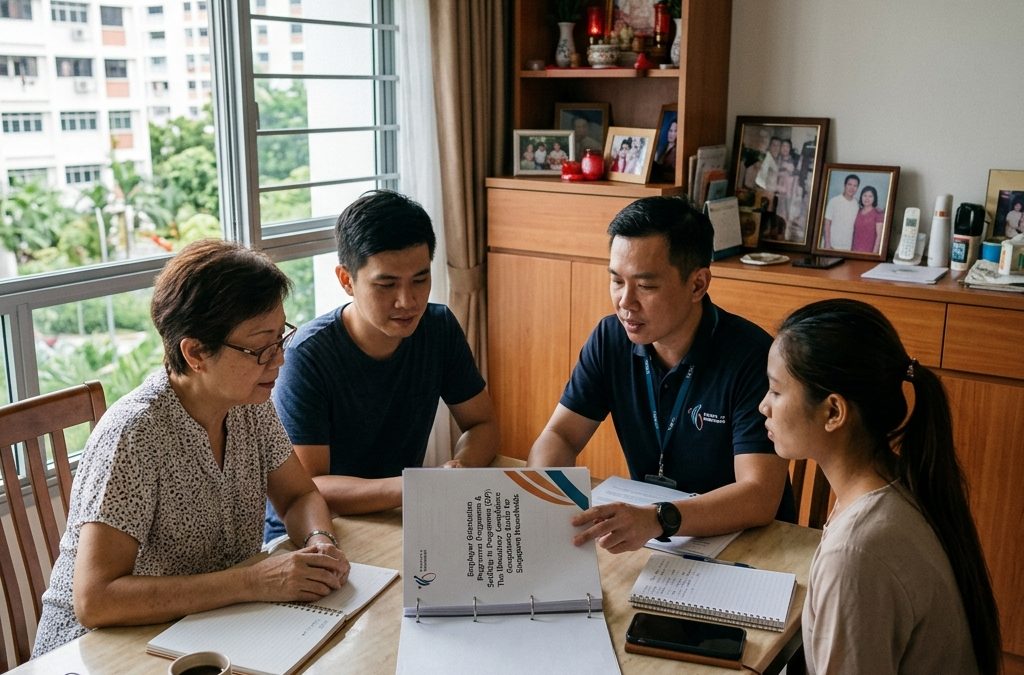
Hiring a Migrant Domestic Worker (MDW) in Singapore is a significant transition that moves a private household into the realm of formal employment. For many Singaporean families, particularly those balancing demanding careers with the needs of young children or elderly parents, the helper is the backbone of the home. However, the Ministry of Manpower (MOM) views this relationship through a strictly regulated lens. To ensure both the employer and the employee are protected, MOM has established two critical pillars of onboarding: the Employer Orientation Programme (EOP) and the Settling-In Programme (SIP). This guide provides an exhaustive breakdown of these requirements, ensuring your household remains in full MOM compliance while fostering a sustainable working environment.
Understanding the Legal Framework of Domestic Employment in 2026
The regulatory environment for domestic employment in Singapore has matured significantly. As we move toward 2026, the Ministry of Manpower has intensified its focus on professionalizing the sector. This means that being an employer is no longer just about paying a salary; it involves a comprehensive understanding of the Employment of Foreign Manpower Act (EFMA). MOM compliance is the foundation upon which every successful household placement is built. Failure to adhere to these regulations can result in heavy fines, the debarment of the employer from hiring future helpers, or even criminal charges in cases of severe negligence.
EELIT Agency Pte. Ltd. views these mandatory programmes not as bureaucratic hurdles, but as essential tools for risk management. The EOP ensures that you, the employer, understand your legal liabilities, from insurance obligations to the provision of adequate rest. Simultaneously, the SIP ensures that your helper is equipped with the knowledge to navigate a high-rise urban environment safely and understands her rights under Singapore law. Together, these programmes mitigate the risk of workplace accidents, legal disputes, and early contract terminations.
The Employer Orientation Programme (EOP): Your First Step as a Manager
If you are hiring a migrant domestic worker for the very first time, the EOP is a mandatory prerequisite before you can even submit a Work Permit application. This requirement also applies to employers who have changed helpers frequently within a short period, as MOM may flag this as a sign of management issues that require retraining. The EOP is designed to ground you in the realities of being an employer in a regulated market.
1. The Curriculum: The programme covers the essential legalities of the employment contract, the Work Injury Compensation Act (WICA), and the specific conditions of the Work Permit. You will learn about the security bond, the monthly levy, and the mandatory medical examinations that occur every six months.
2. Modes of Learning: You can choose between an online module or an in-person classroom session. While the online version offers convenience for busy professionals, the classroom session allows for direct interaction with trainers who can provide clarity on complex family dynamics. EELIT Agency generally recommends the classroom setting for those who are managing multi-generational households with complex care needs.
3. Timeframes and Fees: The course typically takes about three hours to complete. The fees range from $35 for the online version to approximately $60 for the physical session. It is critical to complete this early, as your Work Permit application will be automatically blocked by the MOM system if the EOP record is not updated.
The Settling-In Programme (SIP): Empowering Your Helper
While the EOP focuses on the employer, the Settling-In Programme is tailored for the helper. This is a mandatory one-day orientation for all first-time MDWs arriving in Singapore. Even if a helper has worked in other countries like Hong Kong or the Middle East, if she is new to Singapore, she must attend the SIP within three working days of her arrival, excluding the day of arrival.
The SIP is conducted in the helper’s native language to ensure there is no ambiguity in understanding. The curriculum is divided into five specific modules that cover the most common challenges faced by new arrivals. These include an introduction to Singapore, safety at home, stress management, relationship management with the employer, and an overview of Singapore’s laws and social norms. The safety module is perhaps the most vital, as it teaches helpers how to hang laundry in high-rise buildings safely and how to use modern kitchen appliances without risk of injury.
Employers are responsible for the SIP fee, which is approximately $75 including GST. It is a non-negotiable expense. At EELIT Agency, we coordinate the scheduling of the SIP as soon as the helper lands, ensuring that she is legally compliant and mentally prepared before she even steps foot into your home for her first full day of work.
Safety Protocols: The Core of the SIP and Household Compliance
A significant portion of MOM compliance revolves around physical safety. Singapore’s urban density presents unique hazards that a helper from a rural background might not immediately recognize. The SIP focuses heavily on the “Safety at Home” module because the repercussions of a workplace accident are devastating for both the helper’s health and the employer’s legal standing.
1. High-Rise Laundry Safety: One of the leading causes of fatal accidents in the domestic sector involves helpers leaning out of windows to hang laundry. The SIP teaches helpers to never climb on chairs or ladders near open windows and to ensure that heavy items are placed on the inner parts of the drying rack. As an employer, you are legally required to provide a safe working environment, which may include installing window grilles or specialized drying systems.
2. Proper Use of Cleaning Agents: Many industrial-strength cleaners available in Singapore can be hazardous if mixed improperly. The SIP provides basic training on reading labels and the importance of ventilation. It is your responsibility to reinforce this by showing her exactly where chemicals are stored and which cloths are used for specific surfaces to prevent cross-contamination.
3. Fire Safety and Electrical Awareness: From the correct way to plug in multiple appliances to the immediate actions required during a kitchen fire, these protocols are life-saving. We advise families to conduct a “home tour” following the SIP, where you mirror the safety lessons she learned with the specific appliances in your kitchen.
Financial Compliance: Managing Salaries and Levies
MOM compliance extends deeply into the financial management of the household. A common point of friction and legal intervention is the mismanagement of the helper’s salary. MOM has strict guidelines to ensure transparency and fairness, and failing to follow these can lead to the immediate revocation of your hiring privileges.
1. Digital Salary Payments: While cash payments are still technically allowed if a written record is kept, the Ministry of Manpower strongly encourages electronic payments. Using a dedicated bank account for your helper ensures there is an undeniable digital trail of every transaction. This protects you against claims of non-payment and ensures the helper has direct access to her funds.
2. The Itemized Pay Slip: You are legally required to provide an itemized pay slip every month. This must detail the basic salary, any deductions for amenities or loans (which are strictly regulated), and any overtime or rest day pay. EELIT Agency provides templates to our clients to ensure these slips meet MOM standards.
3. Managing the Levy: The MDW levy is a monthly tax paid to the government. You must ensure your GIRO account has sufficient funds for this deduction. Late payments result in penalties and can cause the helper’s Work Permit to be cancelled without notice. If you are caring for a child under 16 or an elderly person over 67, you may be eligible for the concessionary levy rate, which significantly reduces your monthly overhead.
Rest Days and Mental Well-being: Beyond the Minimum Requirements
In recent years, MOM has shifted its focus toward the mental health of domestic workers. A tired or stressed helper is a safety risk and is less likely to provide high-quality care. Compliance now includes a mandatory rest day policy that cannot be fully compensated away. As of 2023, all MDWs must have at least one rest day per month that cannot be compensated with pay; it must be a physical day off.
A rest day is defined as a continuous period of 24 hours. While many employers and helpers agree on a Sunday, the day can be any day of the week as long as it is mutually agreed upon. During this time, the helper should be free from all household chores and caregiving duties. Respecting this boundary is a key component of MOM compliance and is essential for the longevity of the employment relationship.
Beyond the legal requirement, we encourage employers to discuss how the rest day will be spent. Does she have a safe place to go? Does she have a way to contact her family? Providing these supports does not just meet a legal standard; it builds loyalty and reduces the “runaway” risk that many employers fear. A helper who feels respected is far more likely to adhere to the household’s rules and safety protocols.
Real-World Scenarios: Navigating Cultural and Communication Barriers
Compliance is often tested not during the quiet times, but during moments of conflict. Communication barriers are the primary cause of “non-compliance” where an employer might unintentionally break a rule because they are frustrated. For example, an employer might withhold a helper’s passport or work permit “for safekeeping.” Under MOM regulations, this is strictly prohibited. The helper must be allowed to keep her own documents.
Consider a scenario where a helper is struggling with the cooking style of a traditional Singaporean household. Instead of a disciplinary approach, refer back to the SIP principles of open communication. If the helper is not performing, the solution is retraining, not the withholding of food or rest. MOM takes reports of inadequate food or accommodation very seriously. The law states you must provide three nutritious meals a day and a safe, private sleeping space with adequate ventilation.
Another common scenario involves the use of mobile phones. While MOM does not have a specific “phone law,” they recommend a clear agreement in the employment contract. We suggest setting boundaries—such as no phone use during active caregiving for infants or the elderly—while allowing for private time in the evening to call home. Setting these expectations during the post-SIP period ensures that the helper understands the professional boundaries of her role.
The 2026 Vision: Professionalizing the Singaporean Household
Looking ahead to 2026, we anticipate that MOM will introduce even more specialized training requirements, particularly for helpers engaged in eldercare. As Singapore’s population ages, the “general housework” category is evolving into “specialized domestic care.” Compliance will likely move toward certification-based hiring, where a helper’s SIP might be supplemented by mandatory modules in dementia care or basic physiotherapy.
For the employer, this means that the EOP might also evolve to include “Caregiver Management” training. Staying ahead of these changes requires a partnership with a licensed agency that remains at the forefront of policy shifts. MOM compliance is becoming a dynamic, ongoing process rather than a one-time event. Households that view their helper as a professional healthcare assistant rather than just “the maid” will find it much easier to adapt to these upcoming regulatory changes.
How EELIT Agency Supports Your Compliance Journey
Navigating the EOP and SIP can be overwhelming for a family already dealing with a transition. EELIT Agency Pte. Ltd. acts as your compliance officer. We do not just match you with a helper; we manage the entire regulatory lifecycle of the employment. This begins with verifying that the employer has completed their EOP and continues through the scheduling and transportation of the helper to her SIP session.
1. Documentation Management: We handle all the paperwork for the Work Permit, ensuring that the security bond and mandatory insurance are in place before the helper arrives. This prevents any legal hiccups that could lead to fines.
2. Pre-Arrival Briefing: Before your helper even attends the SIP, we provide a preliminary briefing in her home country or at our training center. This ensures that the SIP is a reinforcement of knowledge rather than a shock to the system.
3. Ongoing Mediation: If a conflict arises regarding rest days, salary, or work scope, EELIT Agency provides mediation services. We use the frameworks taught in the EOP and SIP to remind both parties of their rights and responsibilities, often resolving issues before they escalate to MOM intervention.
4. Renewal and Repatriation: When the contract ends, compliance continues. We manage the renewal process or the legal repatriation of the helper, ensuring that all final dues are paid and the security bond is discharged correctly.
In the complex environment of Singaporean domestic employment, knowledge is your best defense. By fully embracing the lessons of the Employer Orientation Programme and ensuring your helper is thoroughly integrated through the Settling-In Programme, you are doing more than just following the law. You are creating a professional, safe, and respectful environment that allows your family to thrive while providing a fair livelihood for the person who helps you manage it. MOM compliance is the gold standard for a reason; it ensures that the heart of the Singaporean home remains a place of safety and mutual respect.
Connect with EELIT Placement Specialists
Speak directly with our senior placement consultants for personalized bio matching, MOM Work Permit processing, and household caregiving support across Singapore:
Corporate Headquarters Placement Consultation
Corporate HQ Priority WhatsApp: +65 9100 1610
Juliet (Senior Consultant): Chat with Juliet (+65 9168 2493) |
Joey (Senior Consultant): Chat with Joey (+65 8725 2891)
HQ Office Telephone (Hotline / Voice Call Only): +65 6320 3826
Islandwide Branch WhatsApp Lines
Orchard (Far East Shopping Centre): +65 9478 2786
Hougang: +65 8043 9823
Yishun: +65 8090 3168