
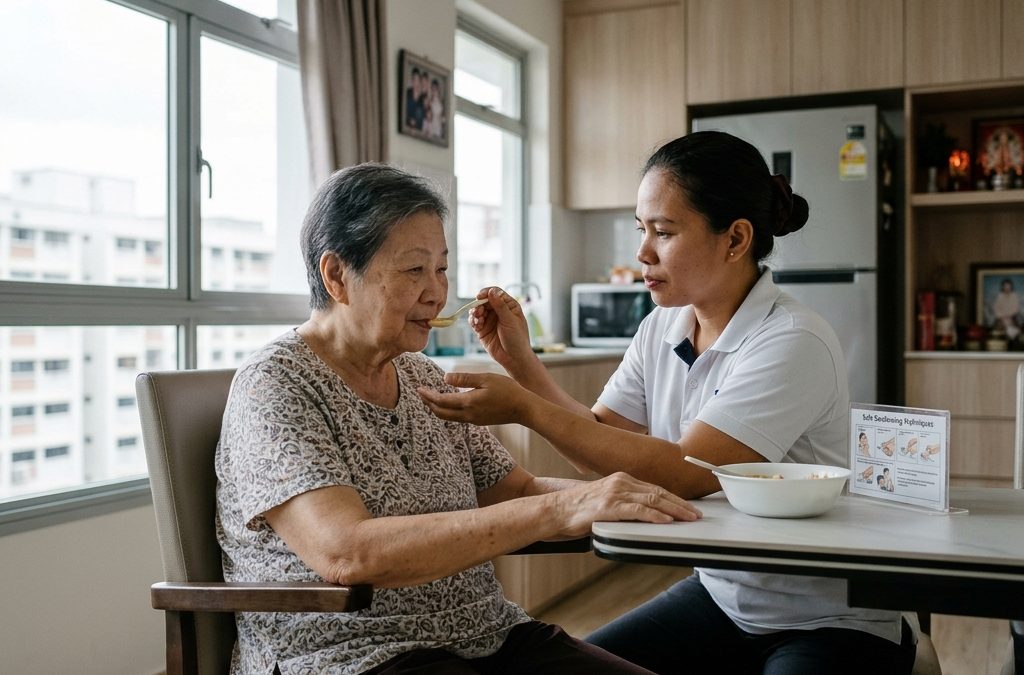
When a loved one suffers a stroke, the transition from an acute hospital ward like Tan Tock Seng Hospital or Singapore General Hospital back to the family home brings immense physical and emotional demands. For many Singaporean working families and multi-generational households, hiring a Migrant Domestic Worker (MDW) is the most viable way to provide round-the-clock attention. However, expecting a domestic helper to instantly master complex elderly rehabilitation without structured guidance often leads to physical strain, caregiver burnout, or accidental injuries. Post stroke care at home requires precise, repeatable protocols for patient mobility, safe feeding, and emotional management. Equipping your domestic helper with practical, hands-on techniques transforms daily caregiving from a daunting challenge into a structured, safe routine that actively supports your family member’s recovery.
1. The Hospital-to-Home Transition: Bridging Clinical Care and Home Reality
The journey of post stroke care begins long before your family member steps through the front door of your HDB flat or private residence. Hospital discharge teams, including physical therapists, occupational therapists, and speech therapists, spend days preparing patients for discharge. However, clinical instructions delivered in a bright, spacious hospital ward do not always translate easily into the tight hallways, narrow bathroom doorways, and traditional living setups of Singaporean homes.
Before your helper takes over daily physical management, you must actively bridge the gap between hospital instructions and home implementation. Arrange for your domestic helper to attend bedside training sessions conducted by the hospital’s occupational and physical therapy teams during the final days of inpatient admission or community hospital stay at institutions such as St. Luke’s ElderCare or Ren Ci Community Hospital. During these sessions, the helper should physically perform transfers, assist with range-of-motion exercises, and practice feeding under the direct supervision of certified therapists.
Take detailed notes or film short video clips of the therapists demonstrating correct handling techniques for your specific home layout. Pay close attention to which side of the body is affected by hemiparesis or hemiplegia. A stroke survivor with right-sided weakness requires entirely different positioning, transfer angles, and feeding setups than one with left-sided weakness. Documenting these specific clinical requirements creates an undeniable baseline of safety for your helper to refer to every single day.
2. Safe Mobility and Transfer Protocols for Domestic Helpers
Improper transfer techniques risk serious injury to both the stroke survivor and the domestic helper. Falls among post-stroke elderly patients frequently lead to secondary injuries such as hip fractures, while caregivers face chronic lumbar strain from incorrect lifting. Teaching your helper proper body mechanics and standardized transfer protocols protects everyone involved.
The Log-Rolling Bed Technique
Getting a stroke survivor out of bed must never involve pulling their weak arms or twisting their spine. Instruct your helper to use the log-rolling method to bring the elder from a lying position to a seated position on the edge of the bed:
- Ensure the bed height is appropriate and lock any wheels if using a medical profiling bed.
- Bend the stroke survivor’s knees while they lie flat on their back. If one leg is paralyzed, the helper should gently assist in bending that leg first.
- Place one of the helper’s hands on the senior’s far shoulder and the other on their far hip.
- Roll the senior as a single unit onto their side, facing the edge of the bed toward the helper. Never pull on the weak arm, as this can easily cause painful shoulder subluxation.
- Guide the senior’s feet gently over the edge of the mattress while applying light downward pressure on their hip and supporting their upper torso, helping them push up into a stable seated position.
Bed-to-Wheelchair Transfers Using a Gait Belt
A transfer belt or gait belt is an non-negotiable tool for home post stroke care. Never permit a helper to lift a senior under their armpits or by grabbing their clothing. The helper should fasten the gait belt securely around the elder’s waist over their clothes. Position the wheelchair at a 45-degree angle to the bed on the senior’s non-affected, stronger side. The helper stands close to the elder, feet spaced shoulder-width apart, knees bent, maintaining a straight spine. By bracing their knees against the elder’s weaker leg to prevent it from buckling, the helper grasps the gait belt on both sides, assists the elder to stand up, pivots smoothly toward the stronger side, and lowers them safely into the wheelchair.
Pressure Sore Prevention and Turning Schedules
Bedbound or severely mobility-impaired stroke survivors face a high risk of pressure ulcers (bedsores). A rigid turning schedule must be integrated into your helper’s daily duties. Implement a mandatory two-hour repositioning schedule throughout the day and night:
- Rotate the elder between three primary positions: left side-lying, flat on their back (supine), and right side-lying.
- Utilize thirty-degree lateral positioning using wedge pillows to keep pressure off the sacrum and greater trochanter bones.
- Place floating pillows underneath the lower legs to keep heels elevated off the mattress completely.
- Apply prescribed moisture barrier creams during diaper changes or bed baths to safeguard vulnerable skin against moisture breakdown.
3. Dysphagia Management and Safe Feeding Protocols
Swallowing difficulties, medically termed dysphagia, affect a significant percentage of post-stroke individuals. When food, liquids, or saliva enter the airway instead of the esophagus, it can cause silent aspiration, leading rapidly to aspiration pneumonia—a major cause of readmission and mortality in post-stroke seniors. Equipping your domestic helper with strict dietary and positioning rules during meal times is vital.
Understanding Texture Modifications and IDDSI Standards
Speech therapists prescribe specific food and liquid textures based on the International Dysphagia Diet Standardisation Initiative (IDDSI) framework. Your helper must be fully educated on these exact levels. If the speech therapist prescribes Level 4 Pureed food and Level 2 Slightly Thickened liquids, the helper must never offer plain water, soup broth, or soft rice dishes out of sympathy or convenience. Liquids must be mixed with commercially available starch-based or xanthan gum-based thickeners using precise measurement scoops, allowed to sit for the recommended duration to achieve uniform viscosity before serving.
Mechanics of Safe Feeding
Feeding a stroke survivor requires patience, quiet surroundings, and correct posture. Instruct your helper to follow these mandatory rules for every meal and snack:
- Seat the elder completely upright at a 90-degree angle, either in a dining chair or upright in an adjustable bed. Never feed an elder who is reclining or slumped sideways.
- Maintain a slight chin-tuck posture. Prompt the elder to tilt their chin slightly downward toward their chest when swallowing, which closes off the airway and opens the esophagus.
- Serve small, controlled spoonfuls (approximately half a teaspoon at a time), placing the spoon on the stronger side of the elder’s mouth where muscular control remains intact.
- Verify that the oral cavity is completely clear of residual food before offering the next spoon. Check for “pocketing,” where food remains trapped inside the cheek on the weak side.
- Keep the elder seated upright for at least 30 to 45 minutes after completing a meal to allow gravitational clearing of the stomach and reduce the risk of reflux or aspiration.
Identifying Warning Signs of Aspiration
Train your helper to spot subtle signs of swallowing failure immediately. Wet or gurgly vocal tones after drinking, sudden coughing spells, tearing up, delayed swallow responses, or a low-grade fever occurring hours after meals are clear indicators that fluid or food is entering the lungs. If these symptoms occur, feeding must stop immediately, and the family must contact the primary healthcare provider or speech therapist for re-evaluation.
4. Singapore Regulatory Framework, AIC Grants, and MOM Guidelines
Managing post stroke care in Singapore requires understanding the local regulatory, financial, and employment frameworks governed by the Ministry of Manpower (MOM) and the Agency for Integrated Care (AIC).
Navigating MOM Employment Regulations and Rest Days
Caring for a bedbound or high-dependency stroke patient is physically and mentally taxing. Under MOM regulations, every Migrant Domestic Worker is entitled to one rest day per week or financial compensation in lieu of rest days agreed upon mutually in writing. For high-needs post-stroke care, families must carefully structure rest day arrangements to maintain continuous, safe care for the senior while upholding legal standards.
If your helper takes their physical rest day, your family must have a clear relief care plan. You can step in directly, hire home nursing care providers, or utilize short-term center-based respite options funded under AIC programs. Leaving a bedbound stroke patient unattended or forcing an untrained family member to handle transfers without proper instruction during the helper’s day off invites safety hazards. Clear work agreements registered in alignment with MOM guidelines protect your household while ensuring your helper receives adequate rest to prevent fatigue-related care errors.
Leveraging the Caregiver Training Grant (CTG) and Home Caregiving Grant (HCG)
Singapore provides substantial financial assistance schemes designed to lighten the cost of home eldercare and domestic helper employment:
- Caregiver Training Grant (CTG): Administered by AIC, this scheme provides an annual subsidy (currently up to $200 per care recipient per financial year) to offset the cost of approved caregiver training courses. You can send your domestic helper to hands-on training courses run by accredited providers like St. Luke’s ElderCare, NTUC Health, or the Singapore Red Cross. These practical courses teach real-world mobility transfers, stroke rehab assistance, dysphagia management, and emergency response in local languages including English, Bahasa Indonesia, Tagalog, and Mandarin.
- Home Caregiving Grant (HCG): For stroke survivors with moderate-to-severe disabilities (requiring assistance with three or more Activities of Daily Living such as washing, dressing, feeding, toileting, transferring, and moving around), eligible families receive a monthly cash payout ranging from $250 to $400. This grant directly offsets the cost of employing an MDW or hiring home care services.
- Migrant Domestic Worker Levy Concession for Eldercare: Families caring for a Singapore Citizen aged 67 or older, or a person with a certified disability living at the same address, qualify for the concessionary levy rate of $60 per month instead of the standard levy fee.
5. Structuring a Daily Routine and Managing Emotional Changes
A predictable, structured schedule brings stability to a stroke survivor’s day while helping your domestic helper manage household chores alongside intense caregiving duties.
Sample Daily Rehabilitation and Care Schedule
A clear, written daily schedule displayed on the wall or refrigerator helps your helper stay organized and focused:
- 07:00 AM – 08:30 AM: Morning Hygiene and Skin Check
Assist with bed bath or seated shower using a sturdy shower chair. Check skin integrity over pressure points. Perform oral hygiene carefully, especially cleaning the tongue and cheeks to clear bacteria that could cause aspiration pneumonia. - 08:30 AM – 09:30 AM: Posture-Correct Breakfast & Medication
Position upright at 90 degrees. Serve prescribed dysphagia-friendly breakfast and administer medications using a structured dosette box. Maintain upright posture for 45 minutes post-meal. - 10:00 AM – 11:30 AM: Home Rehabilitation Exercises
Assist elder with passive or active-assisted Range of Motion (ROM) exercises prescribed by the hospital physiotherapist. Encourage the elder to use their weaker side for functional tasks, such as holding a light ball or reaching for objects. - 12:00 PM – 01:30 PM: Lunch and Rest Period
Follow safe feeding protocols. After maintaining upright post-meal posture, guide the elder into a scheduled two-hour afternoon nap or low-stimulation rest period. This time allows the domestic helper to handle light domestic duties or take a well-deserved break. - 03:30 PM – 04:30 PM: Cognitive and Occupational Therapy Activities
Engage the elder in simple cognitive exercises like sorting colored objects, listening to familiar dialect music, or practicing simple hand-grip activities. - 06:00 PM – 07:30 PM: Evening Meal and Wind-Down Routine
Serve dinner using strict thickener guidelines. Prepare for bed, perform skin check, apply barrier cream, and assist into initial night-time sleep position.
Overcoming Language Barriers in Care Instruction
Many elderly Singaporeans speak specific dialects such as Hokkien, Teochew, or Cantonese, or prefer Mandarin, while domestic helpers typically arrive with basic English, Tagalog, Bahasa Indonesia, or Burmese. Language gaps can cause frustration during post stroke care when an elder cannot communicate distress or pain. Create a simple visual flashcard chart translated into your helper’s native language. Pictures indicating “Pain,” “Toilet,” “Thirsty,” “Hot,” “Cold,” or “Tired” pinned near the bed allow immediate, non-verbal communication between the senior and the helper, drastically reducing anxiety for both parties.
Handling Stroke-Induced Mood and Behavioral Changes
Brain injury caused by stroke often manifests in sudden emotional lability, depression, impulsivity, or uncharacteristic vocal outbursts. Elderly stroke survivors frequently experience deep grief over lost independence. Educate your domestic helper that emotional outbursts or refusal to cooperate with exercises are clinical symptoms of brain trauma, not personal attacks against the helper. Train your helper to respond with calm de-escalation techniques: using a quiet, gentle voice tone, diverting attention to pleasant topics or familiar music, stepping back briefly to give space if safety allows, and reporting persistent mood shifts to you so medical follow-ups can address potential post-stroke depression.
6. How EELIT Agency Pte. Ltd. Bridges the Gap for Singaporean Families
Managing the clinical complexities of post stroke care alongside your regular career and family commitments is a profound responsibility. Trying to source, vet, and train a domestic helper completely on your own adds unnecessary risk and stress during an already challenging period.
As a Ministry of Manpower (MOM) Licensed Employment Agency, EELIT Agency Pte. Ltd. specializes in matching Singaporean households with domestic caregivers who possess practical experience and genuine aptitude for elderly and post-stroke care. We understand that post-stroke requirements vary significantly depending on hemiparesis severity, speech impairment, dysphagia levels, and mobility status.
Our comprehensive placement process includes rigorous candidate screening for prior caregiving experience, nursing background, or hands-on clinical training in handling mobility equipment, bed baths, and safe transfers. We collaborate directly with employers to identify specific clinical needs—whether your elder requires tube feeding (NG tube), catheter management, precise dysphagia diet preparation, or structured physical therapy assistance.
Furthermore, EELIT Agency helps employers seamlessly navigate Caregiver Training Grant applications, levy concessions, and MOM compliance requirements. We ensure your helper receives target-specific orientation, translating medical discharge instructions into practical daily routines so that from day one, your helper steps into your home equipped, confident, and ready to deliver safe, dignified post stroke care. Reach out to EELIT Agency Pte. Ltd. today to discuss your family’s caregiving needs and secure dedicated, skilled care support for your loved one’s recovery journey.
Connect with EELIT Placement Specialists
Speak directly with our senior placement consultants for personalized bio matching, MOM Work Permit processing, and household caregiving support across Singapore:
Corporate Headquarters Placement Consultation
Corporate HQ Priority WhatsApp: +65 9100 1610
Juliet (Senior Consultant): Chat with Juliet (+65 9168 2493) |
Joey (Senior Consultant): Chat with Joey (+65 8725 2891)
HQ Office Telephone (Hotline / Voice Call Only): +65 6320 3826
Islandwide Branch WhatsApp Lines
Orchard (Far East Shopping Centre): +65 9478 2786
Hougang: +65 8043 9823
Yishun: +65 8090 3168