
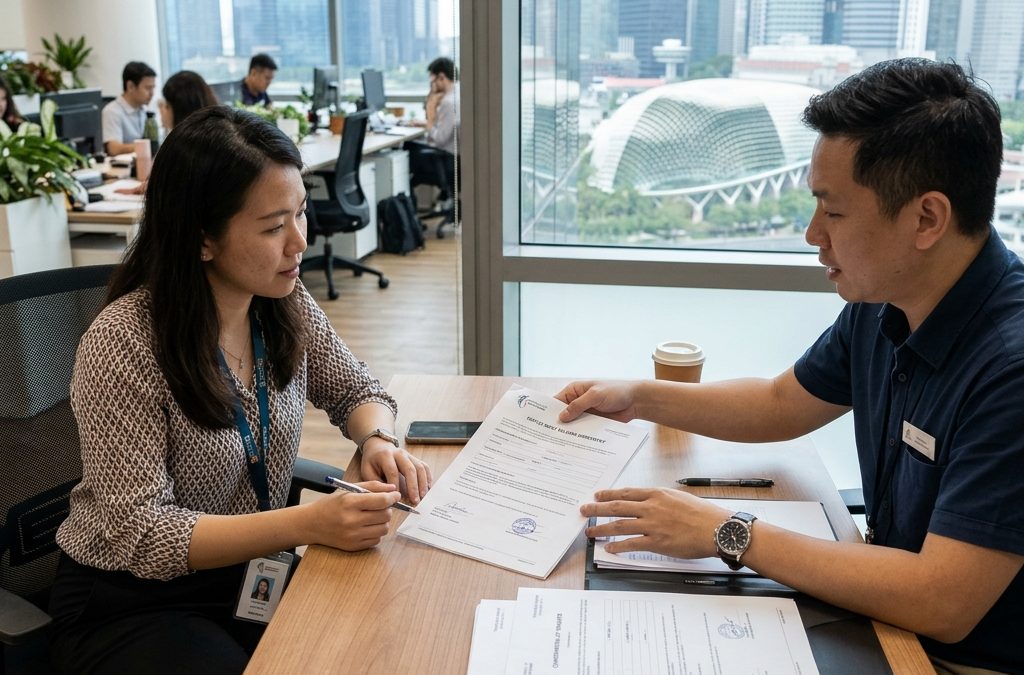
Navigating the complexities of domestic employment in Singapore often leads to a critical juncture where an employer and a Migrant Domestic Worker (MDW) decide to part ways. For many Singaporean families, especially those managing the delicate balance of multi-generational care, the process of ending a contract is not merely a logistical task but a legal and emotional transition. The Transfer Maid Release Letter Singapore families often hear about is the cornerstone of this transition, acting as the formal bridge that allows a helper to move to a new household without the necessity of repatriation. At EELIT Agency Pte. Ltd., we recognize that understanding the Ministry of Manpower (MOM) guidelines is essential for protecting your family’s interests while ensuring a fair departure for your helper. This guide provides an exhaustive look into the legalities, practical steps, and strategic considerations involved in mutual termination and the issuance of transfer letters.
Understanding the Legal Nature of the Transfer Maid Release Letter
In the Singaporean employment context, a Transfer Maid Release Letter is a formal document issued by the current employer expressing their consent to transfer the MDW’s Work Permit to a prospective new employer. Under the Employment of Foreign Manpower Act, an employer is the legal sponsor of the MDW. This means the helper cannot simply choose to work for another family without the current employer’s explicit written permission and the subsequent approval of the Ministry of Manpower. The release letter serves as a declaration that you are willing to waive your right to repatriate the helper, allowing her to seek alternative employment within a specific timeframe.
It is important to clarify that providing a release letter is a choice, not an absolute obligation under every circumstance. However, it is a practice highly encouraged by MOM to promote a more flexible and stable labor market. By 2026, Singapore’s regulatory framework is expected to place even greater emphasis on the transparency of these transfers. The release letter is not just a courtesy; it is a legal instrument that shifts the responsibility of the security bond and medical insurance from the current employer to the future employer once the transfer is officially approved and the new Work Permit is issued.
A standard release letter must contain specific details to be recognized by agencies and the Ministry. These include the full name of the helper as it appears on her passport, her Work Permit number, the employer’s NRIC or FIN, and a clear statement of consent for the transfer. It should also specify the validity period of this consent. Typically, employers provide a window of 14 to 30 days for the helper to find a new employer through an agency like EELIT. If a transfer is not successful within this period, the original employer remains responsible for the helper’s repatriation costs, a fact that every Singaporean household must keep in mind before signing the document.
The 2026 Regulatory Outlook and MOM Framework
As we approach 2026, the Ministry of Manpower continues to refine the domestic worker employment landscape to ensure better matching and higher retention rates. The “transfer-only” model is becoming more common as it reduces the financial burden on families who would otherwise have to pay for new airfares and recruitment fees for a worker coming from overseas. The MOM framework currently mandates that if a helper wishes to transfer, the employer must decide whether to allow it or to send her home at the end of her contract or upon termination.
One of the significant updates in the regulatory environment involves the transparency of the helper’s employment history. Prospective employers now have greater access to the MDW’s previous employment records, including the reasons for transfer. When you issue a release letter, you are essentially contributing to this record. If the termination is mutual and due to a mismatch of skills rather than misconduct, the release letter reflects a professional exit. This transparency is vital for the integrity of the Singapore employment ecosystem, ensuring that families can make informed decisions based on the worker’s actual performance history.
Furthermore, the 2026 outlook suggests stricter oversight on the “transfer window.” Currently, when an employer agrees to a transfer, the helper is often given a period to stay at the agency’s boarding house. During this time, the original employer is still technically responsible for her upkeep and medical insurance until the new Work Permit is issued. Understanding these liabilities is crucial. The MOM’s goal is to minimize the “floating” period where a helper is between employers, thereby reducing the financial risk to the outgoing family.
The Process of Mutual Termination: A Step-by-Step Guide
Mutual termination occurs when both the employer and the MDW agree that the current working relationship is no longer viable. This could be due to a change in the family’s needs—such as children growing up or an elderly family member moving to a nursing home—or a realization that the helper’s skill set does not match the household requirements. The first step in this process is a formal discussion. We recommend conducting this conversation in a calm environment, clearly outlining the reasons for the termination without assigning blame. This sets a tone of professionalism that facilitates a smoother transfer process.
1. The initial conversation: Communicate the intent to end the contract. If the helper has performed well but is not a fit for your specific needs, explain that you are willing to support her transfer to another family. This is where the offer of a Transfer Maid Release Letter becomes a powerful negotiation tool.
2. Setting the timeline: Decide on the last day of work. You must provide the notice period stipulated in the employment contract, which is usually 14 days or one month. Alternatively, you can pay salary in lieu of notice if the situation requires an immediate departure. During this period, the helper should be allowed time to interview with prospective employers, often facilitated by an agency.
3. Signing the Release Letter: Once the timeline is agreed upon, the employer signs the Transfer Maid Release Letter. This document should be handed to the helper or her chosen employment agency. At EELIT Agency, we often take over the coordination at this stage to ensure all paperwork is handled according to MOM regulations, protecting the employer from administrative errors.
4. The MOM Portal Update: The employer must log in to the MOM Work Permit Online (WPOL) system to indicate their “Consent to Transfer.” This is a digital requirement that mirrors the physical release letter. Without this digital consent, no other employer or agency can apply for a new Work Permit for the helper.
5. Handover and Final Settlement: Ensure all outstanding wages, including the pro-rated 13th-month bonus or any unused leave, are paid. Keep a written record of this final payment signed by both parties. This prevents future disputes regarding unpaid salary, which is a common point of contention in MOM mediations.
Drafting the Release Letter: Essential Components
While there is no single “magic” template required by law, a Transfer Maid Release Letter must be clear and unambiguous to be effective. It serves as a legal waiver of your right to repatriate the helper. When drafting this document for your household, ensure it includes the date of issuance. This date is critical because it marks the beginning of the transfer window. A letter without a date can lead to confusion regarding how long the helper has been searching for a new job while under your legal responsibility.
The letter must explicitly state: “I, [Your Name], NRIC [Your NRIC], the employer of [Helper’s Name], Work Permit Number [WP Number], hereby give my unconditional consent for her to transfer to a new employer.” By using the word “unconditional,” you signal to agencies and the MOM that you will not obstruct the transfer process once a suitable employer is found. However, you can add a clause stating that this consent is valid for a specific duration, such as 21 days, after which the helper must be repatriated if no transfer has occurred.
It is also helpful to include a brief, honest statement regarding her performance. If she was a good worker but was unable to handle complex nursing tasks for a bedridden senior, stating this clearly helps the next employer understand her strengths. This level of detail is highly valued in the Singaporean community and builds trust. Avoid using the release letter to vent frustrations; keep it factual and focused on the legal consent required for the transfer process.
When Should an Employer Refuse a Transfer?
Granting a transfer is a gesture of goodwill, but there are scenarios where a Singaporean family should exercise their right to refuse and opt for repatriation instead. The most common reason for refusing a transfer is gross misconduct. This includes instances of theft, physical abuse of children or the elderly, or recurring and severe breaches of house rules that compromise the safety of the household. In such cases, allowing a transfer might simply pass the problem to another unsuspecting family.
Another reason to refuse a transfer is if the helper has repeatedly expressed a desire to stop working altogether but is being pressured by external parties to find a new job. If a helper is genuinely unhappy or unfit for domestic work in Singapore, repatriation is the most responsible course of action. Furthermore, if an employer has concerns that the helper may go “missing” or “run away” during the transfer window, they may choose to cancel the Work Permit and arrange for immediate repatriation to discharge their security bond obligations quickly.
Employers should also be wary of “transfer-hopping.” This occurs when a helper seeks frequent transfers to avoid finishing contracts or to negotiate higher salaries without a corresponding increase in skill. If you find yourself in a situation where the helper is demanding a transfer just a few months into the contract without valid reasons, you are within your rights to deny the request. However, be prepared to pay for the airfare and follow the proper cancellation procedures. EELIT Agency specialists can provide mediation services in these sensitive cases to determine the best path forward for both the family and the helper.
Navigating the “Transfer Only” Trap and Financial Risks
A common challenge for Singaporean employers is the “Transfer Only” demand. Some helpers may insist on a transfer and refuse to be sent home, even when the relationship has broken down. This can put the employer in a difficult position, as they are legally responsible for the helper’s food, housing, and medical care as long as the Work Permit is active. If the helper refuses to work and insists on waiting for a transfer, the employer faces a financial drain without receiving the services they hired the helper for.
To avoid this trap, it is essential to have a clear agreement from the start. If you agree to a transfer, set a firm deadline. If a new employer is not found by that deadline, the helper must agree to repatriation. Documenting this agreement can be helpful if the case ever goes to the MOM for mediation. You should also be aware that you cannot forfeit the helper’s salary or hold her passport as leverage to force her to agree to your terms; these are serious offenses under Singapore law.
The financial risk also extends to the security bond. The $5,000 security bond remains “active” until the helper’s Work Permit is cancelled and she has either left Singapore or successfully transferred to a new employer. If she disappears during the transfer window, you risk losing a portion of that bond. This is why working with a reputable agency like EELIT is vital. We manage the transition period, ensuring the helper is properly housed and that all legal paperwork is processed swiftly to minimize the time the original employer is “on the hook.”
Practical Scenarios: Senior Care and Newborn Households
In multi-generational households, the need for a transfer often arises from changing care requirements. For instance, consider a family that hired a helper for general housework and looking after a healthy toddler. As the toddler enters preschool, the family’s needs might shift toward caring for an elderly parent who has recently suffered a stroke. If the helper does not have the physical strength or the training for palliative care, a mutual termination and transfer is often the most humane and practical solution.
In this scenario, the Transfer Maid Release Letter should be seen as a recommendation. The employer can state that the helper is excellent with children but lacks the specialized skills for senior care. This allows the helper to find a home where her skills are a perfect fit, while the family can look for a helper with nursing or eldercare experience. EELIT Agency specializes in these transitions, helping families find caregivers with the specific technical skills required for medical needs while facilitating the exit of the previous helper through the transfer market.
Another scenario involves newborn care. First-time parents often find that their expectations for a helper are different from the reality of 24-hour infant care. If a helper is struggling with the sleep deprivation or the high-stress environment of a newborn household, it is often better to allow her to transfer to a household with older children. Forcing a mismatched helper to stay can lead to safety risks for the infant. A swift transfer process ensures the family can quickly find a more experienced “infant-trained” helper while allowing the previous helper to continue her livelihood in a less stressful environment.
How EELIT Agency Supports Your Family Through the Transition
Managing a transfer is an administrative and emotional burden that most busy Singaporean families find overwhelming. EELIT Agency Pte. Ltd. acts as your professional partner in this process. We provide comprehensive services that go beyond just filing paperwork. Our role begins with mediation; if a relationship is strained, we act as a neutral third party to facilitate the discussion about mutual termination and the terms of the release letter. This often prevents small misunderstandings from escalating into formal disputes at the MOM.
Once the decision to transfer is made, we handle the logistics of the Transfer Maid Release Letter Singapore requirements. We ensure that the letter is drafted correctly, the MOM portal is updated, and the helper is placed in a reputable boarding house if she needs to move out of your home immediately. Our vast database of prospective employers means that we can often find a new home for a transferring helper quickly, significantly reducing the period of liability for the original employer.
For the employer, our service provides peace of mind. We ensure that all legal obligations, from levy payments to insurance transitions, are handled with precision. We also assist in the search for a replacement helper, ensuring that the lessons learned from the previous employment are used to find a better match. Our goal is to make the transfer process a positive step toward a more stable and happy household environment, rather than a source of stress and legal uncertainty.
Ultimately, the Transfer Maid Release Letter is a tool for flexibility and fairness in the Singaporean domestic work sector. When used correctly and with the guidance of a licensed employment agency, it allows families to adapt to their changing needs while respecting the rights and aspirations of the workers who support them. Whether you are dealing with a mismatch in skills or a change in family circumstances, understanding the legal framework and following a structured process ensures that your household remains a place of security and harmony.
Connect with EELIT Placement Specialists
Speak directly with our senior placement consultants for personalized bio matching, MOM Work Permit processing, and household caregiving support across Singapore:
Corporate Headquarters Placement Consultation
Corporate HQ Priority WhatsApp: +65 9100 1610
Juliet (Senior Consultant): Chat with Juliet (+65 9168 2493) |
Joey (Senior Consultant): Chat with Joey (+65 8725 2891)
HQ Office Telephone (Hotline / Voice Call Only): +65 6320 3826
Islandwide Branch WhatsApp Lines
Orchard (Far East Shopping Centre): +65 9478 2786
Hougang: +65 8043 9823
Yishun: +65 8090 3168